Technique · 7 min read
How to transport a BMX by car (boot and bike racks)
Boot with the wheel off, roof, tailgate or tow bar: the option that suits your car, and how to protect frame and car.
Guide updated
Quick answer: A BMX fits in almost any car without scratching anything: the trick is taking the front wheel off and protecting the frame, or picking the right bike rack if you carry it every week. This guide compares the four real options — boot, roof, tailgate and tow-bar — and tells you which one suits your car, how often you ride and how to protect the bike and the car on the way.
A BMX fits in almost any car: it is small, light and comes apart in a minute. The problem is not the size, it is getting to the skatepark without scratching the frame, bending the brake rotor or marking up the boot. And if it rides outside, making sure it is still there when you stop for lunch.
In the boot: front wheel off
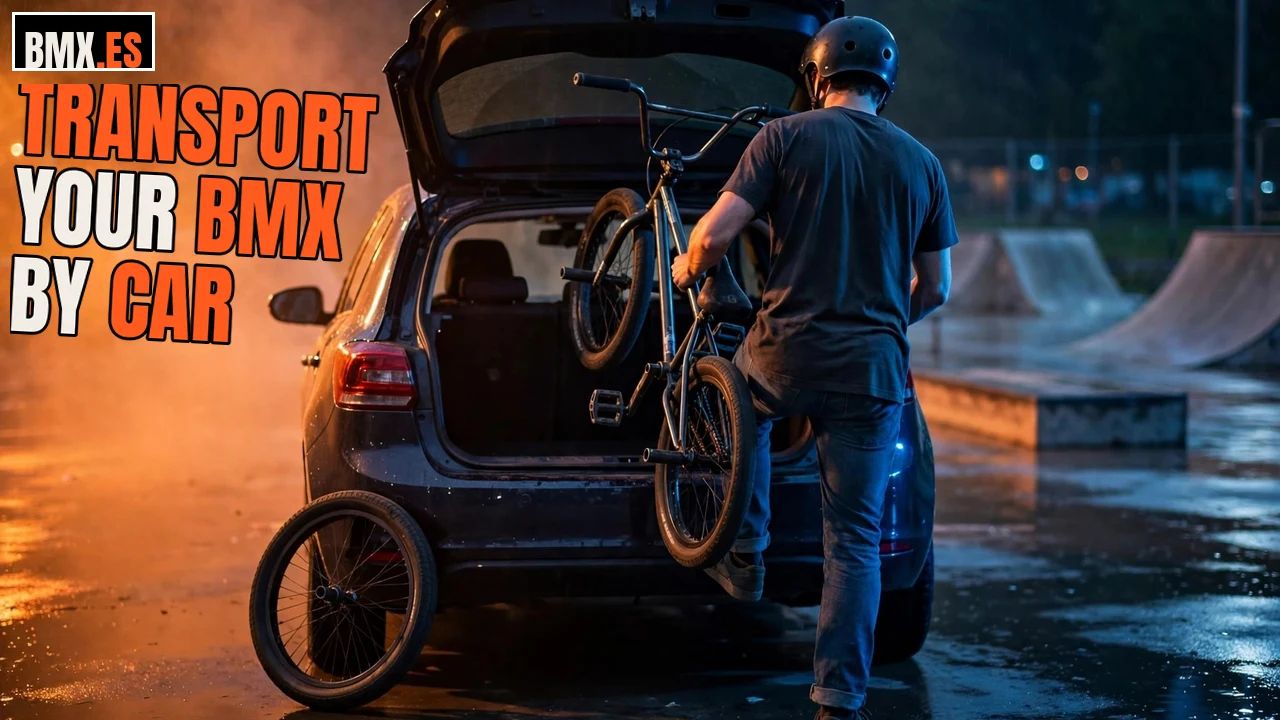
It is what most riders do: it costs nothing, it makes no noise on the motorway and the bike rides protected from rain and prying eyes. A 20-inch BMX fits in the boot of almost any hatchback with the rear seats folded, and in many without folding them. The trick is taking the front wheel off: without it, the bike goes in sideways and leaves room for the helmet, the bag and the pump.
- Take the front wheel off. Loosen the axle nuts (or the quick release, if your bike has one) and lift the wheel out, taking care not to touch the rotor if you run a disc brake.
- Protect the fork. Slide foam, a thick sock or a guard over the fork ends: they are the first thing to hit and the first thing to get marked.
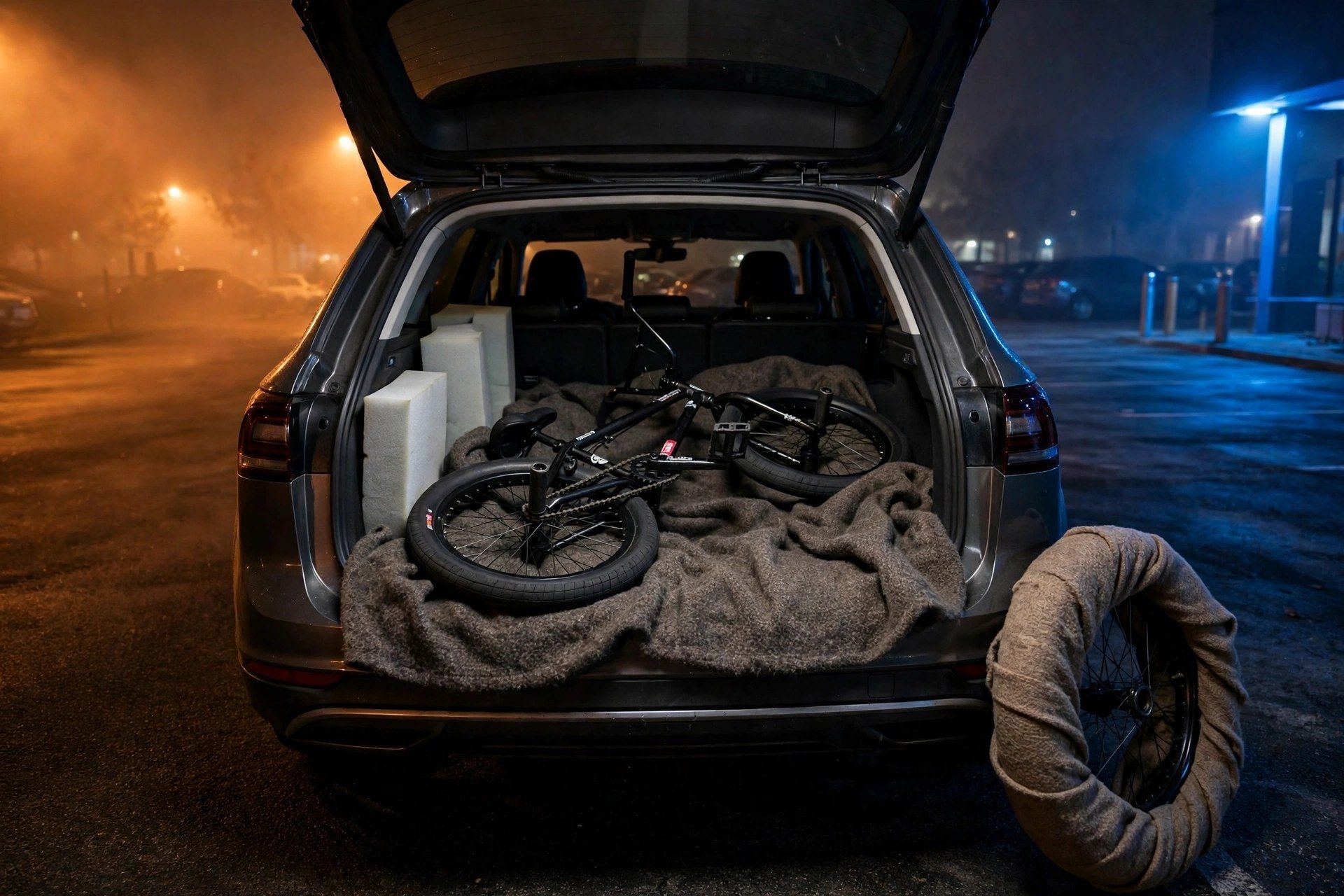
- Fold the seats down and lay a blanket. An old blanket or a tarp in the boot protects the upholstery from chain grease and the frame from rubbing on the plastic.
- Load the bike chainring up. Chainring and chain facing the roof: that way they stain nothing and nothing gets bent. The loose wheel goes on top, rotor up if there is one.
- Stop it moving. A strap or a bungee from the boot hook to the frame keeps the bike from sliding around in every corner and ending up against the tailgate.
If the boot is small, take the pedals off too: one pedal off gives you the missing centimetres and stops the pedal marking the tailgate trim. And if you are carrying passengers, the boot fills fast: two BMXs already want the seats down and some careful packing.
Roof rack
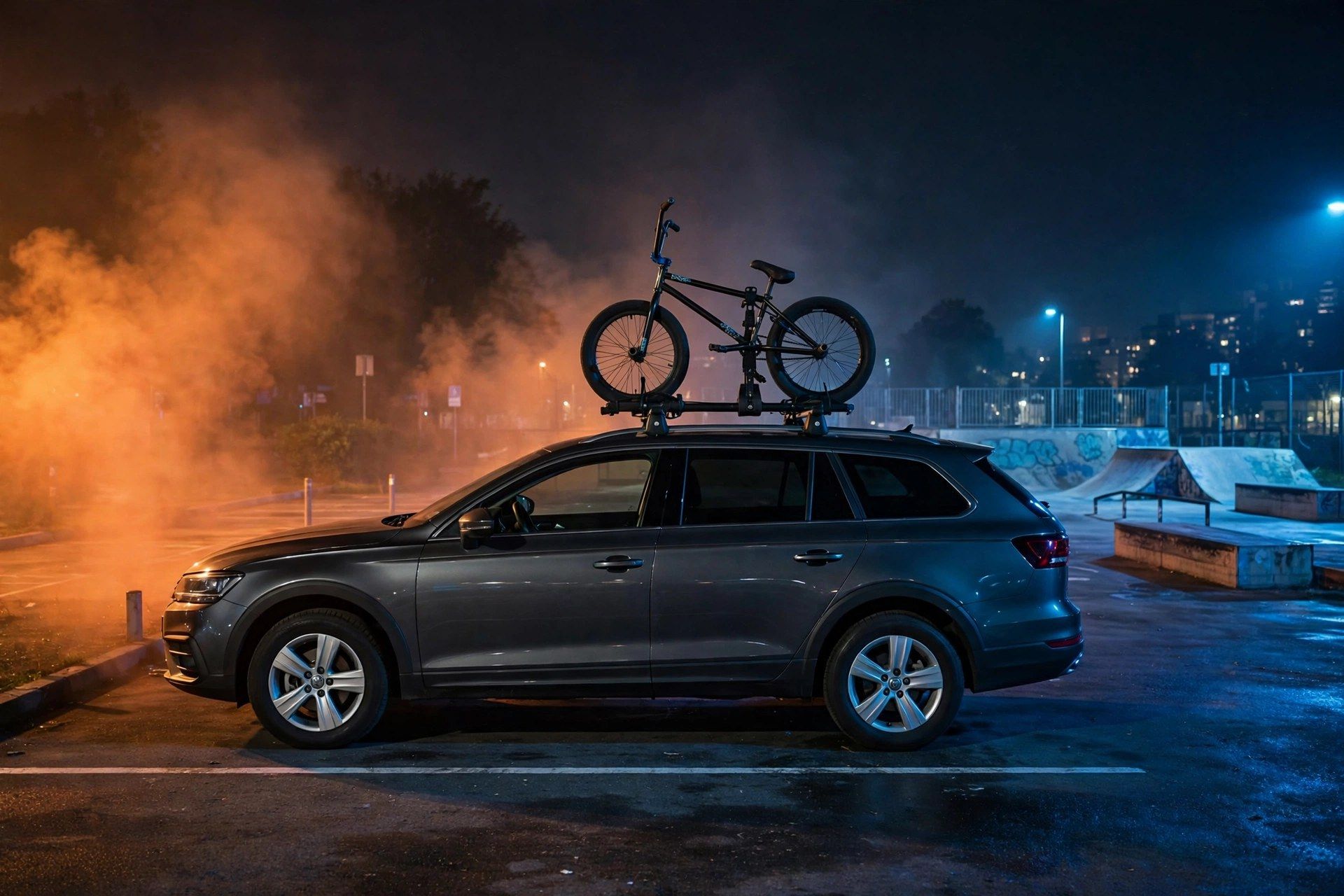
The bike rides up top, held by the wheel or the frame, and the boot stays free for everything else. It is the classic choice for anyone who already has roof bars, but it has two drawbacks for a BMX: you have to lift the bike over your head, and you have to remember it is up there when you drive into a car park.
- The good: the boot stays free, the bike covers neither the number plate nor the lights, and it never rubs the tailgate paint.
- The bad: loading the bike up top is tiring, it burns more fuel from wind resistance, and one careless moment with car park height gets expensive.
- What to check: that the mount holds the bike by the wheel and does not squeeze the frame, and that the bars are rated for the weight of the bike.
Tailgate rack
It hooks onto the tailgate with straps and hooks, with no tow bar and no roof bars. It is the cheapest outside rack and it fits in minutes, which is why it is the one you see most in skatepark car parks.
- The good: cheap, no fitting needed, and it stows in the boot when you are not using it. It carries one or two bikes.
- The bad: it rests on the bodywork and the glass: without padding it marks the paint, and the straps loosen with use.
- What to check: thick pads where it rests, that it does not cover the number plate or the lights, and that the straps are tight before you set off.
Tow-bar rack
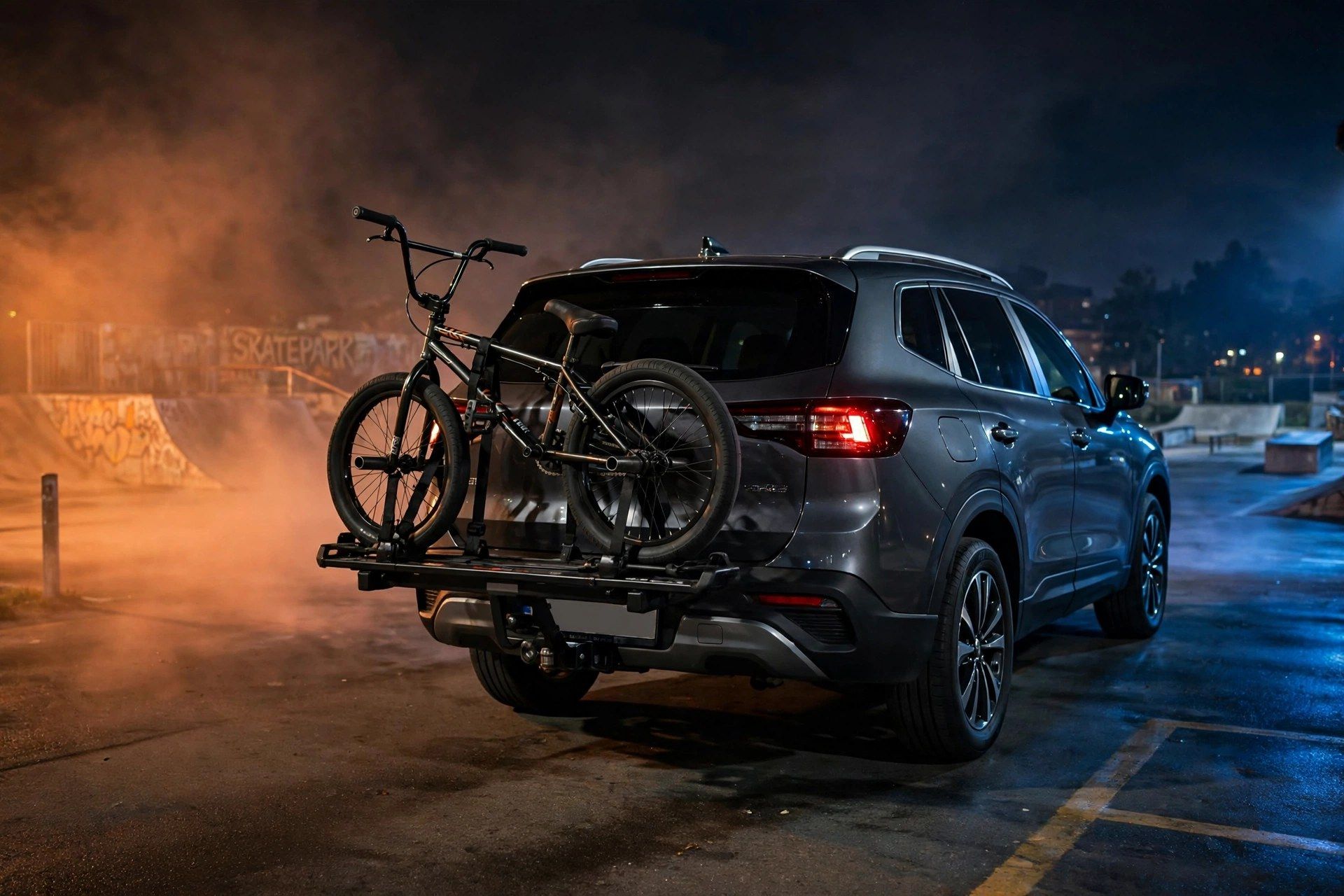
If your car has a tow bar, this is the most comfortable rack to use: it clicks on in seconds, the bikes sit by their wheels in a rail, and it tilts so you can open the boot without taking anything off.
- The good: the fastest to load and unload, the most stable on the road and the kindest to the bike and the car.
- The bad: it needs a tow bar fitted and it is the priciest of the three. With the bike on, check that the number plate and lights can still be seen.
- What to check: that the model tilts to open the tailgate, that it carries lights and a number plate holder if it covers the car's own, and that it holds the bike without squeezing the frame.
The four options, compared
| Option | Best for | Watch out for |
|---|---|---|
| Boot | One-off trips and cars with no tow bar | That the bike cannot move or stain anything |
| Roof | A boot that is always full | Car park height and the effort of loading |
| Tailgate | A tight budget and occasional use | That it does not mark the paint or cover the plate |
| Tow bar | Carrying it every week | The tow bar fitted, and that lights and plate stay visible |
Protecting the frame and the car
Most damage from carrying a BMX does not happen on the road: it happens while loading and unloading. A pedal rubbing the frame, an unprotected fork, a chain staining the upholstery. All of it is avoided with three things you already have at home.
- An old blanket or towel between the bike and the boot, and another between bike and bike if you carry two. It is the cheapest protection there is.
- A guard on the fork and the chainring: a thick sock over the fork ends and a cover on the chainring stop the two most common rubs.
- Take off what sticks out: pedals and, if needed, turn the bars: every part that sticks out is a scratch waiting to happen.
- Keep a lock handy: if you stop for lunch with the bike on a rack, lock it with a U-lock for BMX even if it is only for ten minutes.
The rules: what the law says in Spain
The rule is common sense and comes down to three ideas: the load must not stick out beyond what is allowed, it must not cover the number plate or the lights, and it must be tied down so it cannot fall off or shift. If a rear rack covers the number plate or the lights, you need a supplementary plate and lights that can be seen. And if the load sticks out at the back, it has to be marked with the right warning panel.
Before you set off
Walk around the car before you start the engine: number plate visible, lights clear, bike tied down and nothing sticking out unmarked. Thirty seconds that save you a fine and a headache.
On arrival: the two-minute check
A bike that has travelled in the boot or on a rack arrives just as it left, but it deserves two minutes before the first drop-in: the vibrations can loosen something.
- Fit the front wheel and tighten the axle nuts fully. It is the step most often forgotten and the one that matters most.
- Check the brake: squeeze the lever and make sure the wheel spins freely without rubbing.
- Check the pressure: with a floor pump for BMX, pump up to your usual pressure: a soft tyre on the first jump will pinch-flat.
- Look at the chain and pedals: that the chain has not come off and the pedals spin with no play.
If you have just bought the bike and this is the first time you put it together at your destination, our guide to assembling your new BMX runs through the full build — wheel, bars and pedals — with the final safety check.
Frequently asked questions
Does a BMX fit in the boot of a small car?
Yes, in most: with the front wheel off and the rear seats folded, a 20-inch BMX fits in almost any hatchback. Measure the boot before the first time, and take the pedals off if you are a few centimetres short.
Does a tailgate rack damage the car?
It can mark the paint if it rests straight on the bodywork: use the rack’s own pads and check the straps are tight. With padding and a good fit, it leaves no mark.
Can I drive with the number plate covered by the rack?
No: the number plate and the lights must be visible at all times. If the rack covers them, you need a supplementary plate and extra lights on the rack itself.