Learn · 7 min
How to get into BMX racing: club, licence, bike and kit
From your first club session to your first race: licence, categories, bike and compulsory kit.
Guide updated
Quick answer: To get into BMX racing, find your nearest track and the club that runs it: that's the usual way to train with a coach and learn everything else. To race in events on the Spanish federation (RFEC) calendar you need a federation licence, issued by your regional federation, at any age. The bike must be a 20" BMX with a hand-operated rear brake, and on track the rules require a full-face helmet with a peak, a long-sleeved jersey, full-finger gloves and long BMX or motocross trousers, or shorts with knee and shin protection down to the ankle.
BMX racing is the side of BMX that's raced: several riders drop from a start ramp at once, ride a dirt or asphalt track with jumps, rollers and banked turns, and the first across the line wins. It's been an Olympic discipline since Beijing 2008, with its own rulebook, but getting started is simpler than it looks: almost everything goes through a club.
This guide sets out the steps in order: where to learn, which licence you need, what bike works, what kit you'll be asked for on track and what to expect from your first race. The rules we quote come from the UCI regulations and those of the Royal Spanish Cycling Federation (RFEC); the links are at the end.
1. Find a track and its club
BMX racing tracks are almost always run by a club, or by a town council with a club behind it. The club organises training, knows which days you can ride and tells you whether there's a beginners' school or kit to try. In the BMX.es track directory you can look yours up by region; each listing has the website or contact when we've been able to confirm it.
Before your first visit, message or call the club. Ask which days the school runs, what the minimum age is, whether you need a licence or insurance to train and whether they lend a bike or helmet for the first sessions. The answers vary from club to club, so it's better to know before you turn up.
The track has its own etiquette: you ride in one direction only, nobody stops in the middle of the course and you go back to the start around the outside. It's all in skatepark and track etiquette.
2. The federation licence
To race in an event on the RFEC calendar, a licence is compulsory at any age: the RFEC's BMX rules say it is essential "for all ages and all categories" of riders and coaches taking part in a competition.
You get the licence from the cycling federation of your autonomous region; the RFEC website has the list of regional federations. If you join through a club, it's usually the club that has to authorise your registration on the federation's platform (as the Valencian Community cycling federation explains, for example). The licence includes sports accident and third-party liability insurance for training and federation events, according to the federation itself.
The price and paperwork depend on each regional federation and on your age. We don't list them here because they change every season: check your federation's website or ask at the club.
3. Categories: who you'll race against
See the age categories
In RFEC calendar events you race by age and sex. On a 20" bike, the categories are Promesa (ages 5-6 and 7-8), Principiante (9-10), Alevín (11-12), Infantil (13-14), Cadete (15-16), Junior (17-18), Elite/Under-23 (19 and over) and Masters 30, 40 and 50-plus. There's also a Challenge 17 to 29 category for riders of that age who don't have the competitive level of their licence category. If you come to BMX racing as an adult with no experience, it's usually the one that fits.
There are also Cruiser (24" bike) categories from age 13. Under the rules, any rider who turns 5 during the competition year can race. Each regional federation also runs its own cups and championships, which may have their own categories: check its rules or the notice for each event.
4. The bike: what the rules require
To start training, almost any BMX in your size and in good condition will do. To race, the bike must meet the UCI technical rules, which the RFEC refers to. These are the points that most affect someone turning up on a freestyle bike:
- A hand-operated rear brake is compulsory. The cable must be secured to the frame. A front brake is optional. Lots of freestyle BMX bikes run brakeless: to race, you'll need to fit one.
- 20" wheels in the 20" categories: the rules cap the diameter at 57 cm with the tyre inflated. Promesa riders (8 and under) may use smaller wheels, according to the RFEC.
- No protruding accessories. The rules ban superfluous frame accessories (mudguards, kickstands, chain guards, frame-mounted reflectors…) and sharp protruding objects. Axles can't stick out more than 5 mm beyond the hub nuts. If your bike has pegs, ask at the club or the commissaire before the event.
- Grips are compulsory and must fully cover the bar ends. Handlebars 73.7 cm wide at most, with no cracks or bends.
- Single speed: gears aren't allowed.
- Pedals. Up to age 12, flat pedals with no form of attachment (magnetic ones included). From 13, clipless pedals are allowed. Toe clips and straps aren't allowed at any age.
- Headset and bottom bracket with no play: the fork must turn smoothly in the headset and the cranks must spin without noticeable play. Our maintenance guide explains how to check.
Over time, riders who get hooked on racing tend to move to a bike designed for the track. If you're thinking of buying, our guide to choosing your first BMX explains sizes and materials, and for little ones there's BMX for kids.
5. Compulsory kit on track
Here the rules are very specific, and commissaires can check your kit before practice or the race. If something doesn't comply, you aren't allowed on the track until it's fixed.
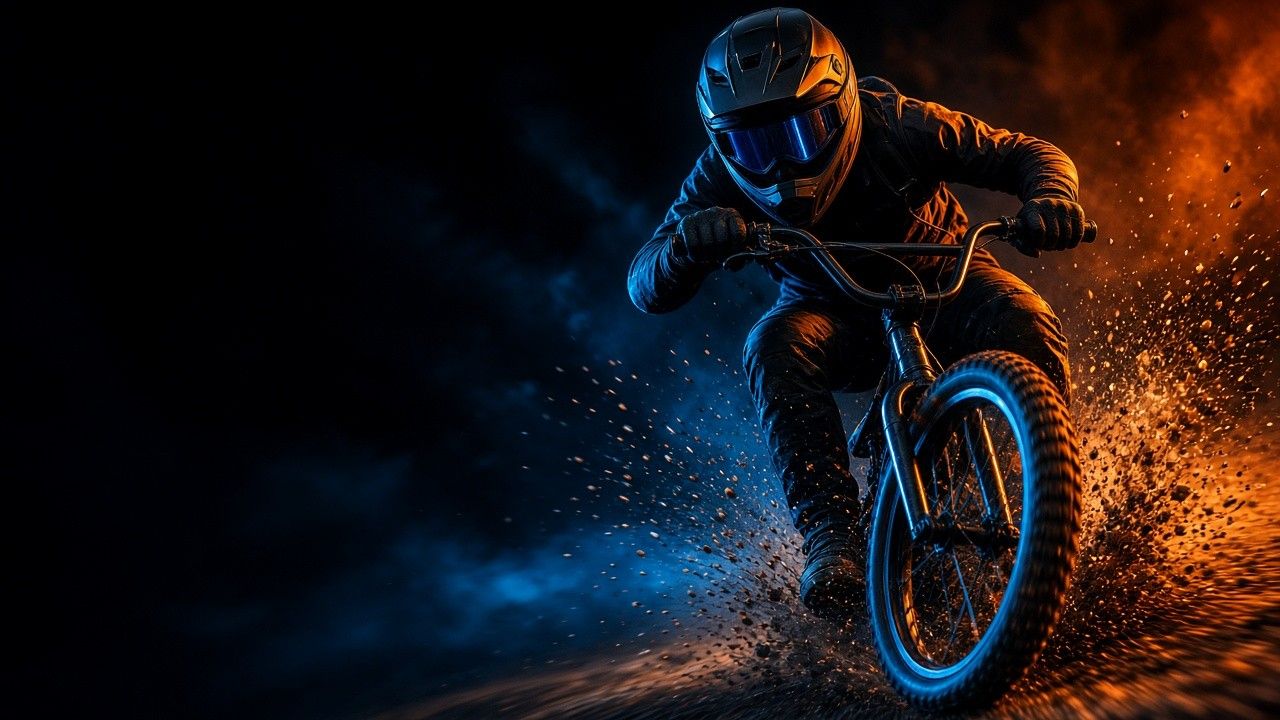
- A full-face helmet with a peak at least 10 cm long. Open-face helmets aren't allowed, and neither is modifying the helmet or peak. It has to be fastened whenever you're inside the track. More in our BMX helmets guide.
- A long-sleeved jersey down to the wrists, of a BMX, motocross or downhill type. Road jerseys, one-piece suits and jerseys with long zips aren't allowed.
- Long trousers in one piece, made of tear-resistant fabric, of a BMX, motocross or downhill type, reaching just above the shoe. The alternative is shorts of the same type with knee and full-shin protection down to the ankle. Tight stretch leggings or trousers don't count as protection.
- Gloves that fully cover the fingertips.
The UCI also strongly recommends rigid back, elbow, knee and shoulder protectors, and neck protection. Our BMX protective gear guide covers how to choose them.
6. Your first race
Once the club sees you can handle the start and the track, they'll suggest an event. It's normal to start with races in your own region before the Spanish Cup. In the BMX.es racing calendar we list events with a link to the official source; dates, times and entries are always decided by the federation's website.
A few things worth knowing before you go:
- Registration and plate. At national calendar events, the RFEC sets a window to register and collect your plate and number before official practice. Without that step you can't ride in practice or race. For regional events, check the notice.
- A plate with your number. At every event under RFEC control you must carry the plate with the number the organiser assigns.
- Motos and the final. You race in heats (motos) of several riders. The best from each move on to the next rounds until the final; the exact format depends on how many riders are entered in your category.
- Arrive early, with your bike ready and your kit complete. Bring water, something to eat and warm clothes for the waiting.
Above all, your first race is for learning how everything works. Watch how the others start, ask your coach and enjoy the gate.
Frequently asked questions
Do I need a licence to train at a BMX track?
To race in RFEC calendar events, yes, at any age. For training it depends on the club or whoever runs the track: some ask for a licence or insurance and others don't. Ask before you go.
What age can you start BMX racing?
Under the RFEC rules, any rider who turns 5 during the competition year can race; the first category is Promesa (ages 5 and 6). For training, each club sets its own minimum age.
Can I race on my freestyle BMX?
For training, usually yes. To race it must meet the rules: a hand-operated rear brake, 20" wheels (except Promesa), grips covering the bar ends, no protruding accessories and a single speed. If it has pegs, ask at the club or the commissaire.
What kit is compulsory in a BMX race?
A full-face helmet with a peak of at least 10 cm, a long-sleeved jersey, gloves covering the fingertips and long BMX or motocross trousers, or shorts with knee and shin protection down to the ankle. It's set out in articles 6.1.081 to 6.1.086 of the UCI regulations, which the RFEC refers to.
What is the Challenge category?
On the RFEC calendar, Challenge 17 to 29 is the category for riders of that age who don't have the competitive level of their licence category (Junior, Under-23 or Elite). It's the usual way in for people starting as adults.
Where can I find BMX races near me?
On your regional federation's website and the RFEC's. In the BMX.es racing calendar we list events with their official link.
Sources
- UCI Regulations Part 6 BMX Racing (2026), arts. 6.1.072-6.1.086
- RFEC — Technical Regulations, Title VI: BMX events (8.04.26)
- RFEC — Cycling licence in your region
- FCCV (Valencian cycling federation) — How to get a licence
- Castilla y León Cycling Federation — 2026 licence
- Olympics.com — BMX racing at the Olympic Games (since Beijing 2008)