Learn · 5 min
How to barspin on a BMX: spin the bars step by step
Spin the bars 360° in the air and catch them: freestyle’s first hands trick.
Quick answer: A barspin is spinning the handlebars one full turn (360°) in the air while you jump: you let go of the bars, throw them with your strong hand, they spin all the way round and you catch them with both hands before landing. You learn it in layers: first the throw-and-catch motion with the bike on the ground, then out of a flyout from a ramp or bank, and finally in a bunny hop on flat ground. The key is not strength: it is throwing early, pinching the seat with your knees so the bike stays straight, and having your catching hand waiting by the grip.
The barspin is freestyle's first "hands" trick: you jump, the handlebars spin one full turn in the air and you catch them before touching the ground. It does not ask you to spin your body like the 180 or to roll backwards like fakie; it asks for something else: losing the fear of letting go of the bars mid-air, and building the motion until it happens without thinking. That is why it is learned in layers, and almost nobody lands it "brute force" on flat ground on day one.
Before you start: what you need
- A consistent bunny hop. The barspin is built on top of the jump: if your bunny hop still works one time in three, the bars are not the next step. You need to take off on both wheels, cranks level, and land straight almost without looking.
- A helmet and shin guards. The classic learning hit is the bar end or a pedal into your shin when a catch goes wrong. Shin guards turn that hit into a minor scare; without them, every session ends early.
- Bars and headset with no play. Bars that spin with friction or jam halfway ruin the trick and can take you down with them: before practising, check the headset turns smoothly and the grips are tight.
- A flyout or a bank with a clean run-out for the air stage, and flat, empty ground for the floor drills. As always when practising in a shared skatepark, read the skatepark and track etiquette.
The motion on the ground: throw and catch without jumping
Before flying, the motion has to exist. Standing over the bike, one foot on a pedal and the other on the ground, lift the front wheel slightly by leaning on the bars and practise the movement: your strong hand pushes the bars around in a circle (as if stirring a big pot) and the other hand stays open, hovering beside its grip, ready to close on the catch the moment the grip comes back round.
- The throwing hand does not just "let go": it drives the first quarter turn with a firm push. A weak throw leaves the bars at half a turn, the hardest position to catch.
- The catching hand does not chase the bars: it waits still where the grip is going to return. If you chase them, you are late for everything.
- Repeat until bored: 50 throws on the ground are worth more than 5 attempts in the air, because in the air there is no time to think the motion through.
In the air: the barspin step by step
- Roll in at medium speed, body centred. Not too fast (no time) and not at walking pace (no air to fit the spin).
- Jump and, the moment you leave the ground, pinch the seat with your knees. That pinch is your "third hand": it fixes the bike so it cannot twist or drop away while your hands are busy.
- Throw early. The number-one mistake is waiting until you are "up high": by the time you throw, you will already be falling. The throw starts in the first half of the jump's rise.
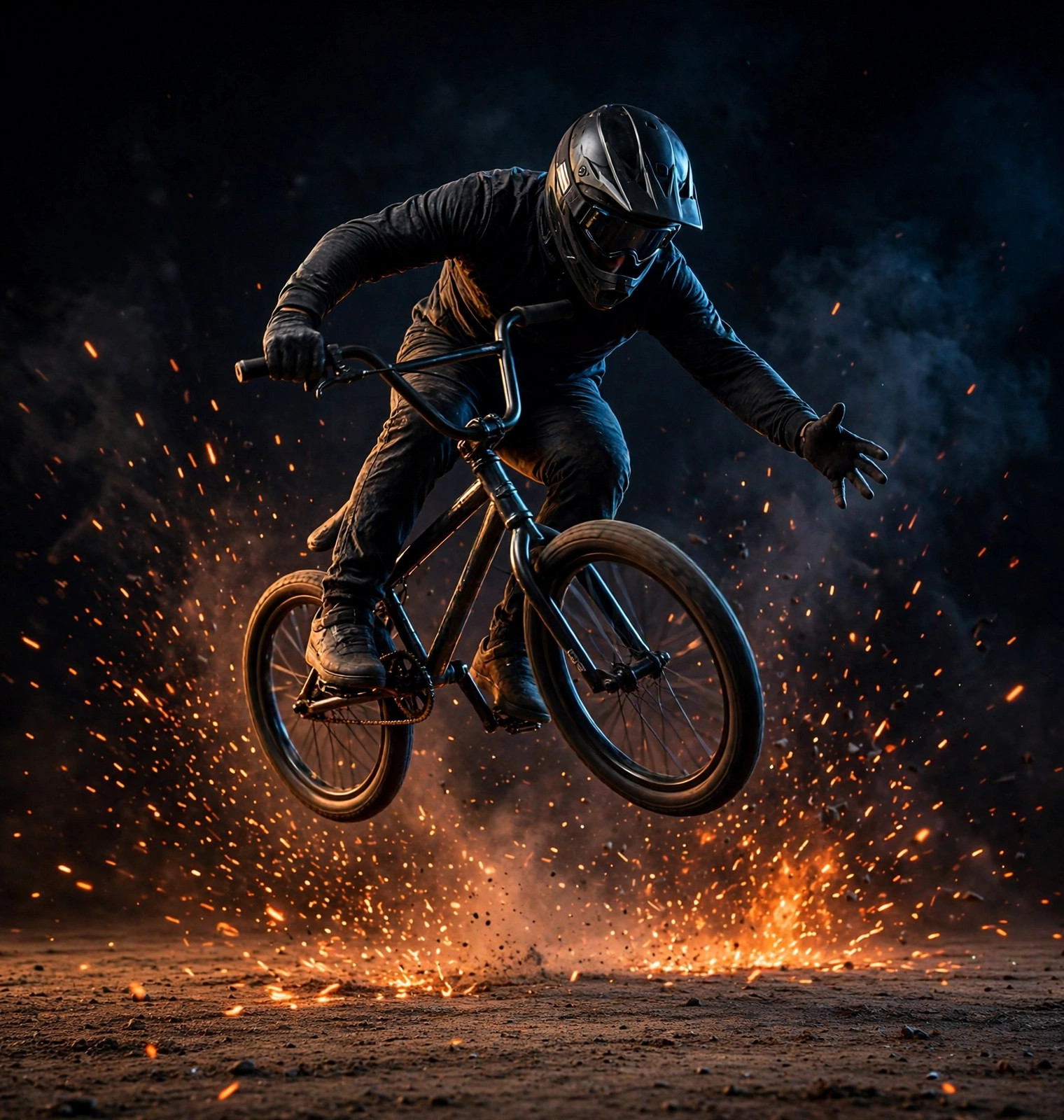
The throw: right after take-off, your strong hand drives the bars around and the other waits open by its grip. - Watch the catch, not the ground. Your eyes go to where the grips will complete the turn; the landing is prepared with your peripheral vision, as in every other jump.
- Catch with both hands and land level. Once your hands are on the grips it is a normal jump again: cranks level, weight centred, eyes ahead.
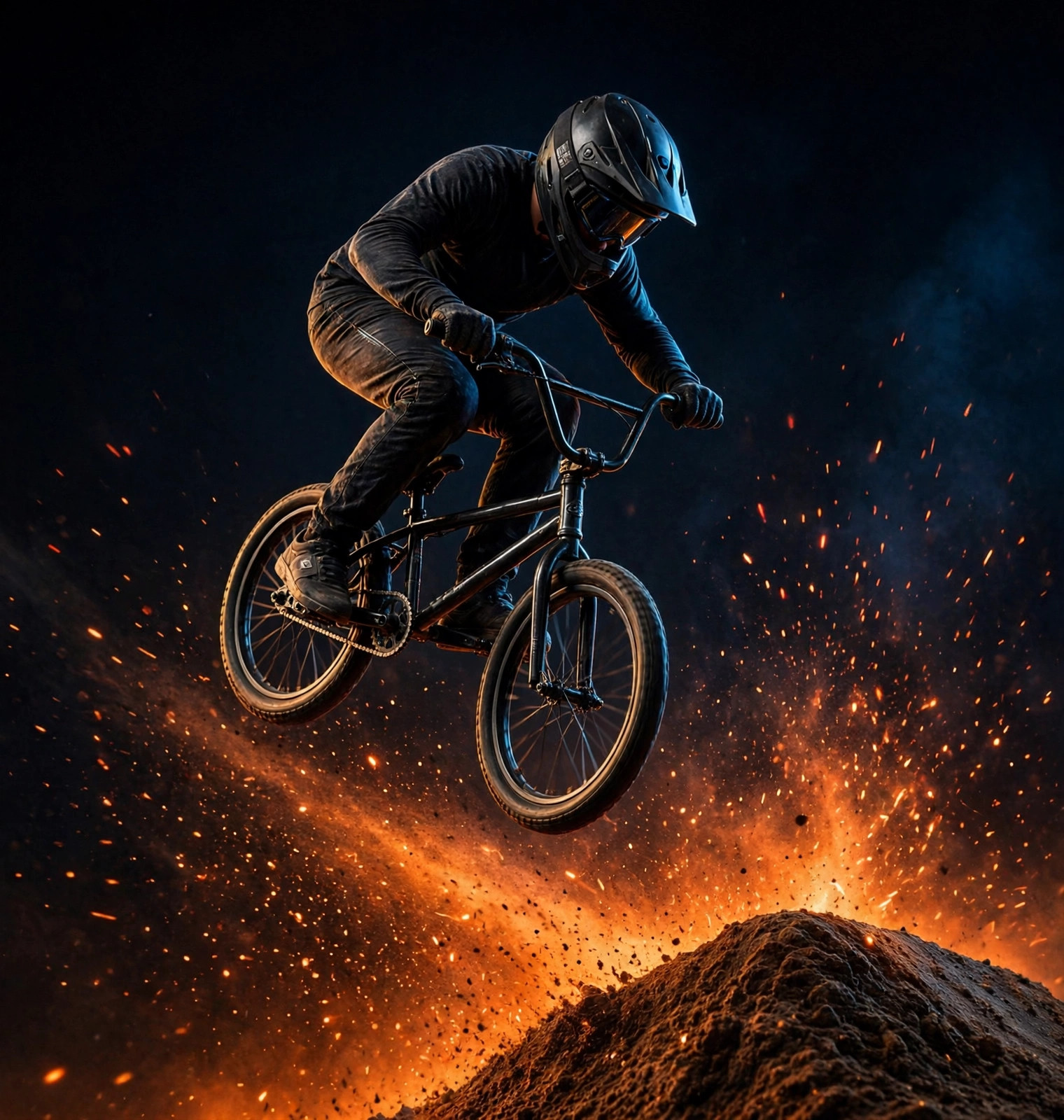
The catch: both hands back on the grips with the bars straight again, and the landing is a normal jump landing.
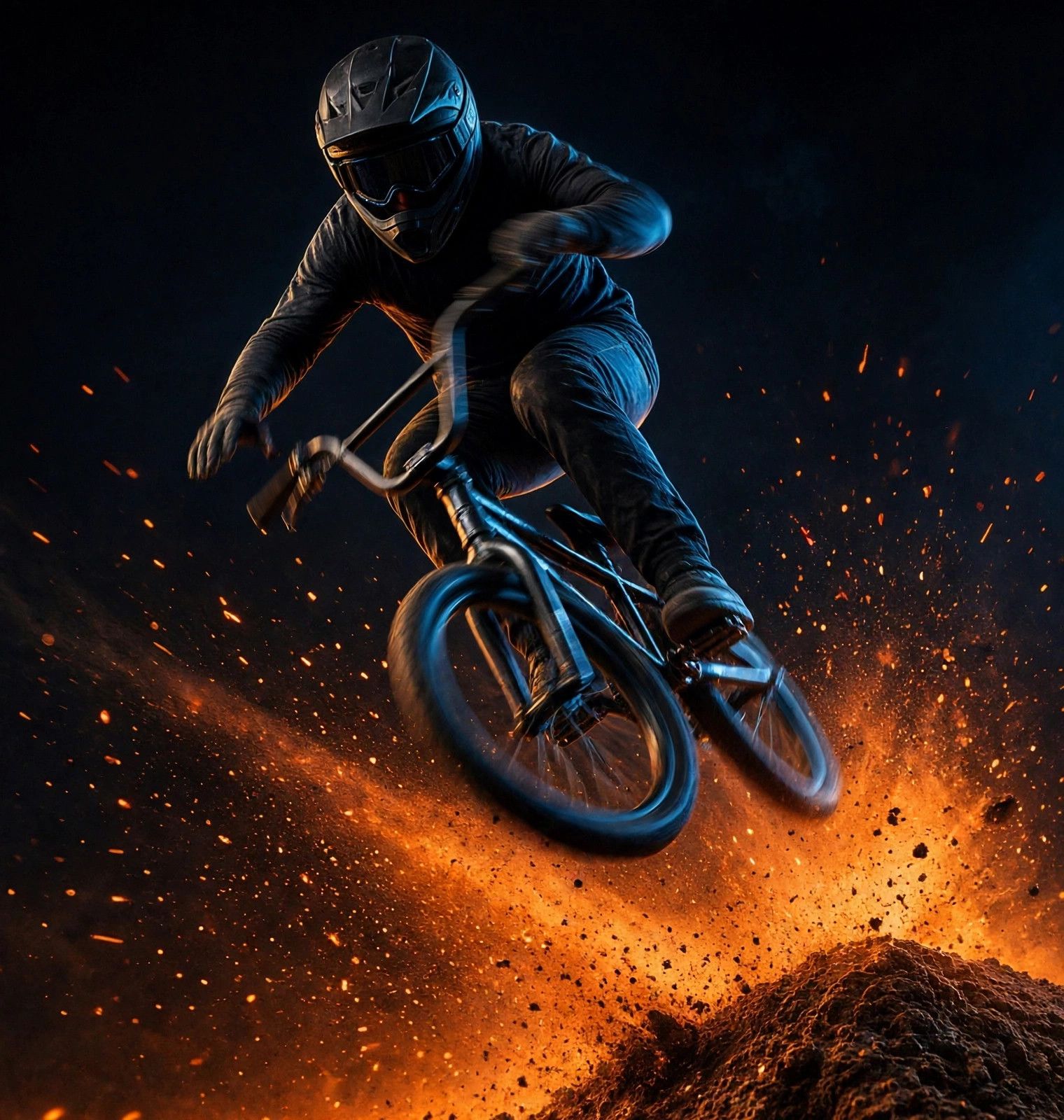
Progression: from the ground to flat
- Motion on the ground: throw and catch 10 times in a row without the bars jamming or the bike falling.
- Rolling slowly on flat ground, without jumping: the same motion with the front wheel barely lifted. It teaches you to let go of the bars while moving.
- Flyout from a bank or quarter: your first barspin with real air. A flyout gives twice the time of a bunny hop: that is where the trick "happens" first for almost everyone.
- Bunny hop barspin on flat ground: the full motion with no ramp helping. Roll in faster than on the flyout and throw even earlier.
- Linking it: a barspin inside a simple line (after a short manual, say, or out of a bank) and, later, out of other tricks.
Common barspin mistakes
- Throwing late. If the bars start spinning when you are already falling, the catch arrives with the wheels on the ground. Throw on the way up, not at the peak.
- Forgetting your knees. Without the seat pinch, the bike twists or drifts away from you the moment you let go, and the trick dies before it starts.
- Letting go with both hands and "seeing what happens". One hand throws and the other waits: that division of labour is the whole trick.
- Staring at the bars for the whole flight. You glance at the catch for an instant; then your eyes return to the landing. Watching the front wheel leaves you with no reference to land straight.
- Trying it on flat ground before a flyout. A bunny hop gives very little air for a new motion: the progression exists so the first success comes early and without hits.
Find a skatepark or a track with a flyout near you in the directory to practise with space and good ground.
What comes next
- Barspin on a bigger ramp: the same motion with more height and speed, on a quarter or a dirt jump, where the air time lets you catch calmly.
- Half barspin: spin the bars only 180° and catch them "backwards"; the door to X-up tricks and cross-bar combinations.
- Barspin out of fakie: throw the bars while rolling backwards, the next rung if your fakie is already solid.
- 180 barspin: the serious combination: half a body turn with a full bar turn. A project of months, not weeks; the base is the 180 and this barspin already on autopilot.
Frequently asked questions
What is a barspin on a BMX?
It is spinning the handlebars one full turn (360°) in the air while you jump and catching them with both hands before landing. It is freestyle’s first "hands" trick: neither your body nor the bike spins, only the bars.
What should you be able to do before learning the barspin?
A consistent bunny hop: taking off on both wheels, cranks level, and landing straight almost without looking. Without that automatic jump there is no air time or spare attention for the bar motion.
Is the barspin easier on a ramp or on flat ground?
On a ramp (a flyout from a bank or quarter) is easier at first because it gives more air time: the catch does not have to be so fast. On flat ground, in a bunny hop, the air is short and the throw has to start in the first half of the jump’s rise.
Which hand throws the bars?
Your strong (dominant) hand, which pushes the bars around in a circle, driving the first quarter turn. The other hand does not throw: it waits open beside its grip to close the catch as soon as the grip comes back around.
Why does my bike twist when I let go of the bars?
Because nothing is holding the bike still: you have to pinch the seat with your knees the moment you take off. That pinch keeps the bike straight and underneath you while your hands are busy with the bars.