Learn · 6 min
How to ride fakie on a BMX: rolling backwards step by step
Rolling backwards under control: the bridge skill between the bunny hop and the 180.
Guide updated
Quick answer: Riding fakie means rolling backwards on your BMX, and it is the bridge skill of freestyle: every 180 lands fakie and most street tricks roll in or out of it backwards. You learn it by rolling in from a gentle ramp, a kerb or by pushing off a wall, rolling slowly, weight centred and looking over your shoulder. The weird part is the steering: going backwards, the bars respond “in reverse” and every correction is the opposite of what your intuition asks for.
Riding fakie means rolling backwards: the bike travels backwards while you look over your shoulder. It sounds like a minor skill, but it is the bridge skill of freestyle: every 180 lands fakie and most street tricks are linked by rolling in or out backwards. Without a calm fakie, every 180 ends with a foot on the ground. If the bunny hop is the base for jumping, fakie is the base for rolling between tricks.
Before you start: what you need
- Confident riding and braking without thinking. You need no tricks first, but you do need the attack position built in: cranks level, arms and legs bent and eyes up. If you are still busy not falling off while rolling forwards, fakie will feel uphill.
- A helmet, no discussion. The first fakie falls happen backwards and without warning: exactly the hit a helmet exists for. And practise away from kerbs and bollards: you have no eyes behind you.
- A flat, wide, empty spot. Rolling backwards you cannot see what is behind you, so the spot is half the session: an empty open space, a car-free car park or the flat area of a skatepark first thing in the morning. If you share the space, read the skatepark and track etiquette and tell people you are practising backwards.
Rolling into fakie: the two doors
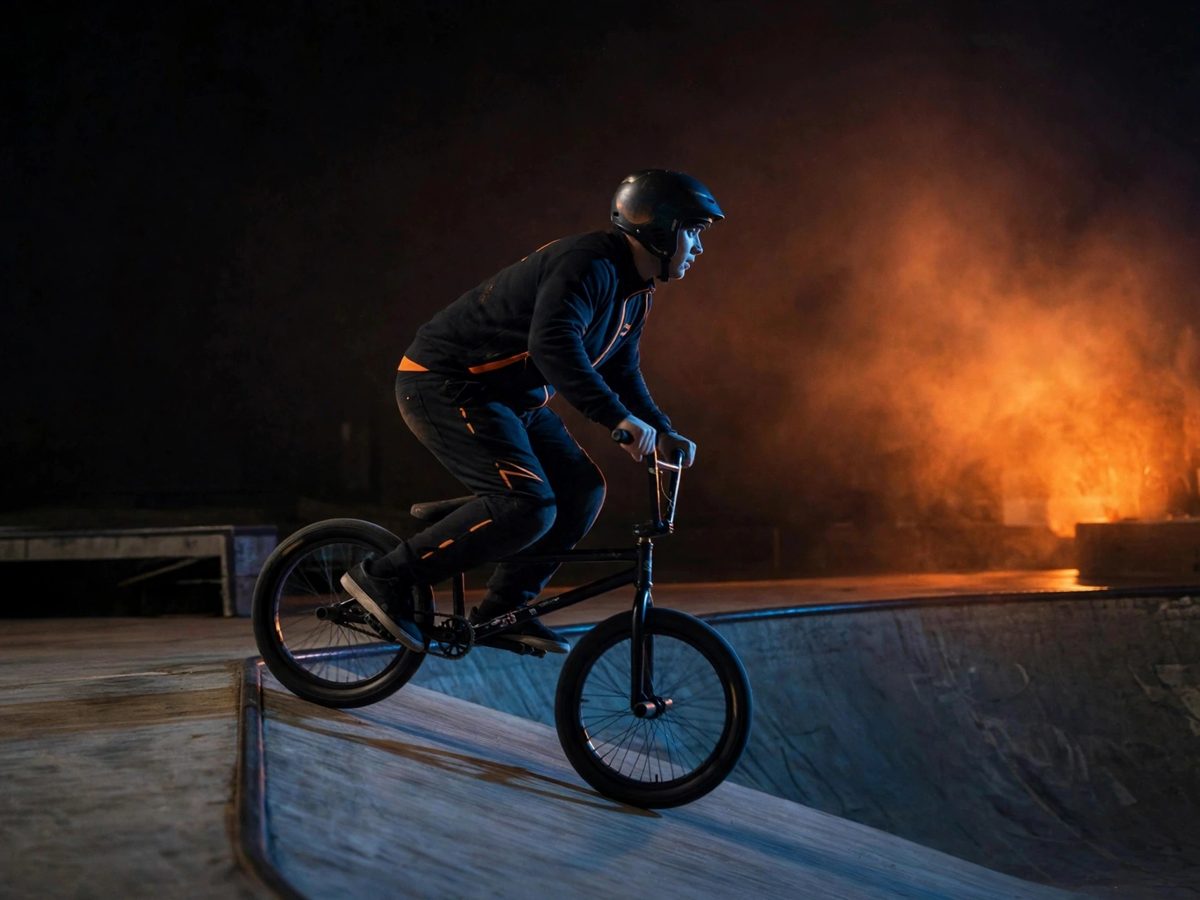
The rollback, the classic. Roll forwards up a gentle ramp (a bank), the low lip of a quarter or to the top of a wide kerb. At the top, stop pedalling and let gravity bring you back: the bike rolls down backwards and you are already in fakie. Start very slowly: the rollback works even at walking pace.
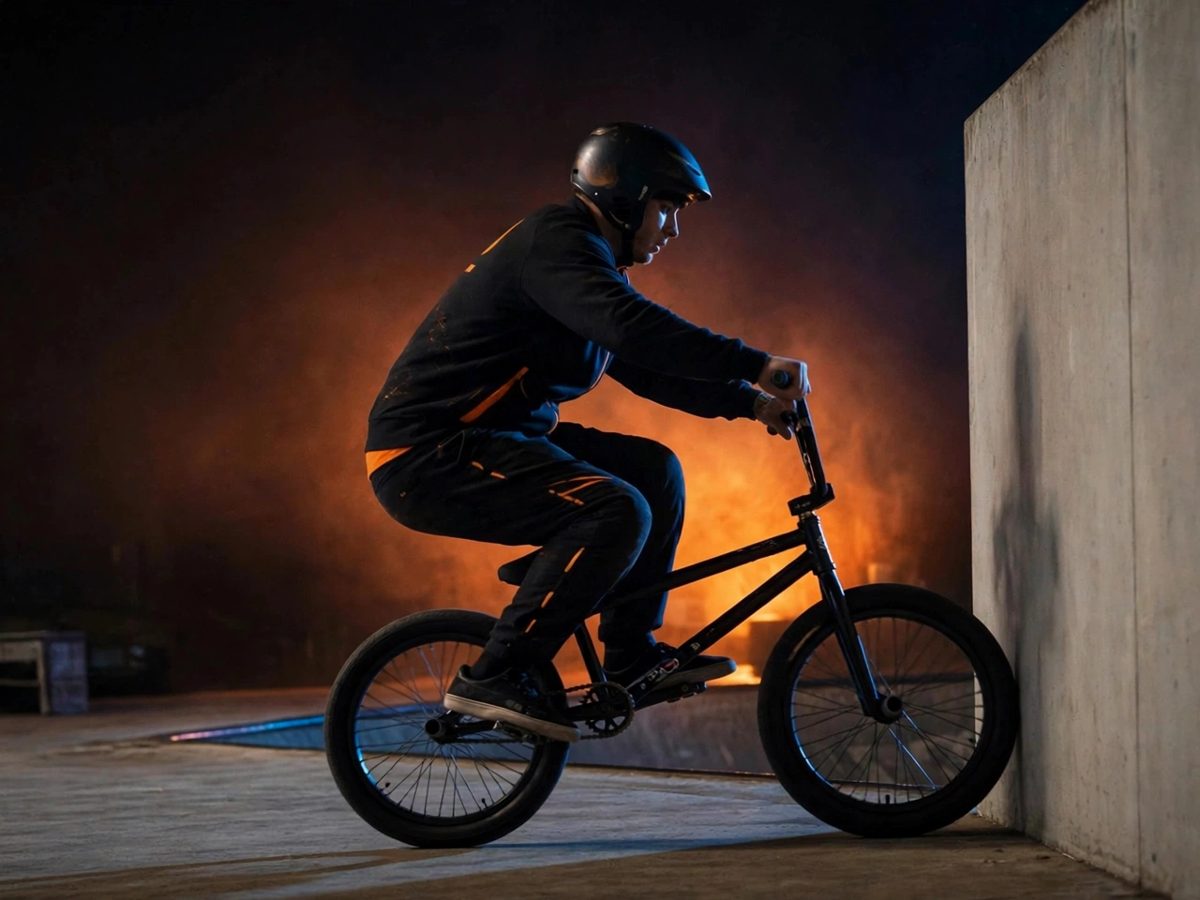
The wall push, the first contact. If there is no ramp around or you want your first two metres without a slope, roll slowly front-first towards a wall, let the front wheel touch it gently and push yourself off with your arms and body to roll away backwards. It only gives you a few metres, but it is the safest way to feel for the first time how the steering behaves going backwards.
The key: the bars work “in reverse”
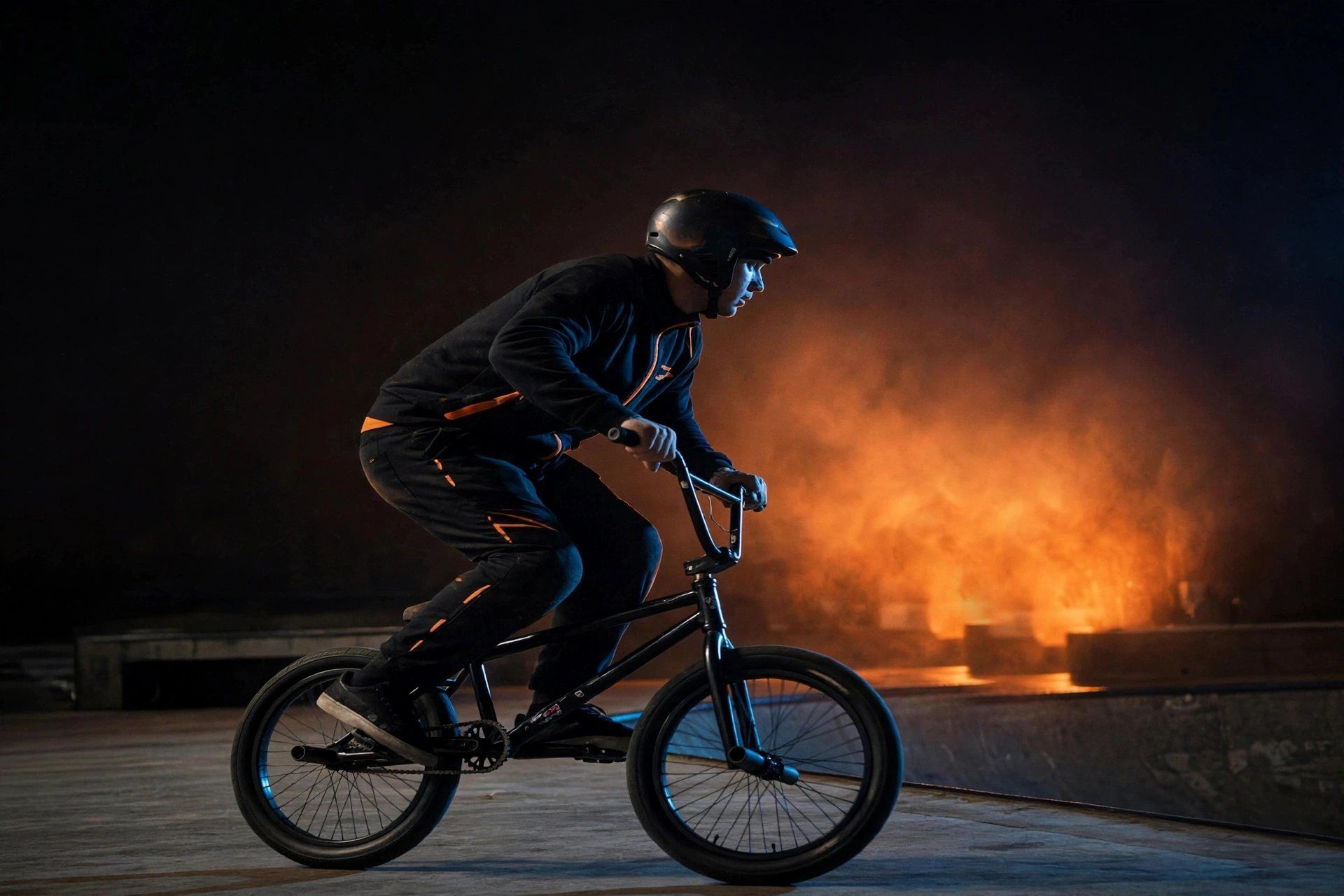
Rolling forwards, correcting is instinctive: if the bike drifts right, you steer right and it straightens. Rolling backwards the geometry flips and the correction that works is the opposite one: to straighten up you turn the bars towards the side opposite to the one your intuition is shouting for. You do not need to understand the physics; you need many short metres until the move becomes automatic.
- Look over your shoulder, towards whichever side feels natural. Staring at the front wheel or the ground locks your body up, just like in the 180: the information you need is behind you.
- Weight centred over the bottom bracket: not hanging off the bars (the front wheel gets twitchy) and not sitting over the rear wheel (you lose steering).
- Small, constant corrections, not big swings of the bars. A calm fakie is a sum of micro-turns.
- Low, steady speed: too slow and you fall sideways before you can correct; too fast and the corrections arrive late.
Your pedals: cassette or freecoaster
Here the bike matters. With a cassette hub (the one on most BMX bikes), rolling backwards makes the cranks spin backwards with you: you have to go along with them, backpedalling at the wheel’s pace. If you resist, the chain brakes you dead and knocks you off line; if you pedal faster than the wheel, the same thing happens. The right rhythm is the one the rear wheel sets, no more, no less.
With a freecoaster hub (common in street), the cranks stay still while rolling backwards: no backpedalling and a freer-feeling fakie. Its toll comes at the exit: when you pedal forwards again there is a small dead spot before the hub engages, and that fraction of an empty pedal stroke has to be anticipated. For learning, whichever hub you already have will do; neither is a shortcut.
Progression: from the wall to 20 metres
- Wall push: 2 metres without a foot down, five times in a row. This is the step for feeling the reversed steering with no slope and no speed.
- Rollback off a kerb or gentle bank: 5 metres roughly holding your line, even if the exit is still a foot down.
- 10 metres with one look over your shoulder without the bike twisting as you look. This is the step that takes the most sessions: give it time.
- 20 metres and a controlled stop: almost coming to a halt while rolling backwards, with no foot down until the very end.
- Ride out 8 times out of 10 with the pivot exit (below). When this works, your fakie can already hold a 180.
How to ride out of fakie
- Roll to a stop and put a foot down. The ugly but safe exit of the first days; fine while the metres are short.
- The pivot with half a pedal. Rolling slowly, turn the bars in the direction you want to swing round and give half a pedal forwards, leaning on the pedal: the front wheel pivots half a turn and you are rolling normally again. It is the same exit the 180 uses when it lands, so it pays to learn it here.
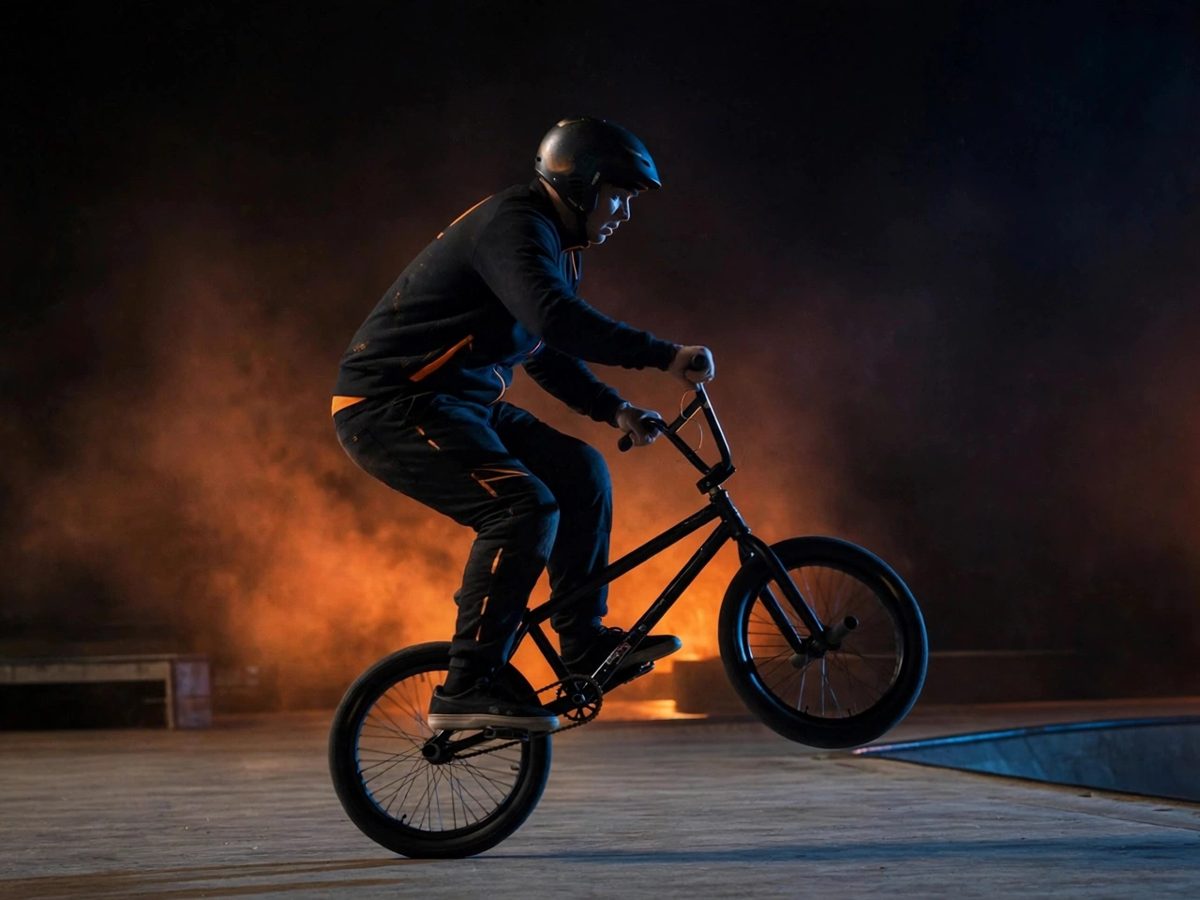
The pivot exit: half a pedal forwards and the front wheel swings half a turn so you roll normally again. - The half cab: the next level. Riding out of fakie with a bunny hop and a half turn, that is, a 180 born backwards. Do not try it until your fakie is automatic; once it is, you have already done the groundwork in the 180 article.
Common mistakes when learning fakie
- Looking at the front wheel. Your body locks up and the bike twists. Your eyes go over your shoulder or at the ground a few metres behind you.
- Stiff arms and clenched grips. Every wobble goes straight into the steering and gets amplified. Bent arms, firm but relaxed hands.
- Rolling in too fast. With speed, the “reverse” correction gives you no time to happen: roll in slowly and let the distance come with the sessions.
- Trying to spin out in the first metre. The exit is step 5 of the progression, not step 1: hold it straight for a few metres first, then turn.
- Fighting the cassette. Resisting the backpedal brakes you and bends your line; go along with the cranks at the wheel’s pace.
Find an open space or a nearby skatepark in the directory to practise with room and no traffic.
What comes next
- Half cab: the bunny hop with a half turn to ride out of fakie. It is the trick that turns fakie into the entrance and exit of lines; it builds on the 180 and the bunny hop.
- Fakie on ramps: rolling up a quarter and coming back down backwards, chaining metres together, the faster version used in park riding.
- Linking tricks: 180 to fakie and a half cab out is many riders’ first complete line; from there, most of street is built the same way.
Frequently asked questions
What does riding fakie mean on a BMX?
It means rolling backwards: the bike travels backwards while you look over your shoulder. It is not a show-off trick, it is a base skill: every 180 lands fakie and most street tricks are linked by rolling in or out backwards.
Can you learn fakie without a ramp?
Yes. You can roll in by pushing off a wall (front wheel touching the wall, push yourself backwards), off a kerb or on a very gentle slope: roll up forwards and let gravity bring you back. A ramp helps, but it is not essential.
Which hub is better for fakie, cassette or freecoaster?
Neither is essential for learning. With a cassette the pedals spin backwards as you roll fakie and you backpedal along with them, which also helps control your speed; with a freecoaster the cranks stay still, but when you pedal forwards again there is a small dead spot before it engages.
Why does my bike keep twisting when I roll backwards?
Because the steering works the opposite way to rolling forwards: the correction that straightens the bike is the reverse of your intuition, and staring at the front wheel or tensing your arms makes it worse. Look over your shoulder and make small, constant corrections until the move becomes automatic.