Learn · 5 min
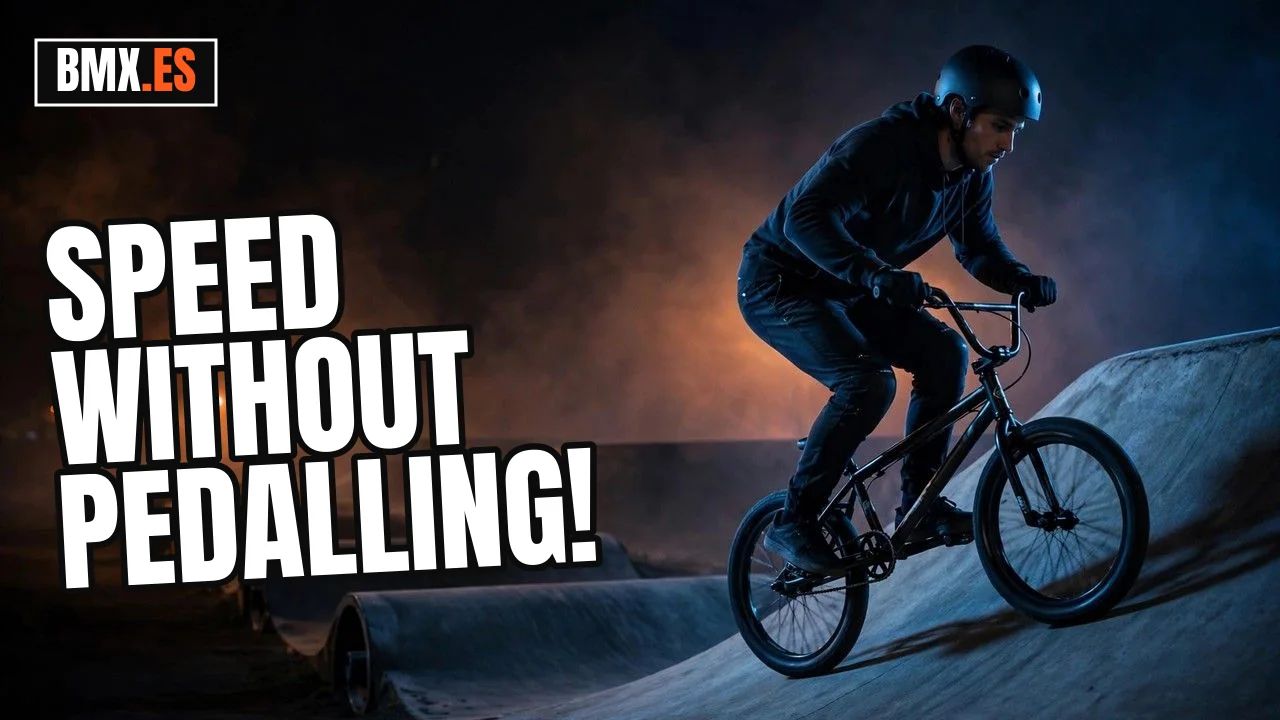
How to pump a pump track on a BMX: speed without pedalling
Generating speed without a single pedal stroke: the pumping technique for pump tracks, racing and bowls.
Guide updated
Quick answer: Pumping is generating speed without pedalling: as you climb each roller you flex and let the bike rise light, and as you drop down the back of the roller you extend your arms and legs, pushing the bike into the slope. That push, repeated roller after roller, is the engine of a pump track: a good pumper laps the whole track faster and faster without a single pedal stroke. It is the same technique BMX racing uses on its straights, and the base for gaining speed in a bowl.
A pump track is deceptive: it looks like a circuit for "just rolling", but riders who just roll stop by the third roller. Speed does not come from momentum or pedalling: it comes from your body, working like a spring synchronised with the ground. Every roller has a face that slows you down and a back that can drive you forward; pumping is collecting on the back and paying as little as possible on the face. When the rhythm clicks, the feeling is unmistakable: the bike accelerates on its own and pedalling becomes pointless.
Before you start: what you need
- The base stance from first steps: cranks level, weight centred, legs and arms working as suspension. Without that stance there is no spring to synchronise.
- A helmet. On a pump track you stand on the pedals the whole time, and a wheel washing out on a berm throws you over the bars: the classic crash on this circuit.
- Firm tyres. Pumping pushes the bike into the ground with your multiplied body weight: soft tyres deform and eat the push. Pump them up firm to the touch, as you would for a race track.
- A pump track or a roller straight (the ones at many BMX race tracks work). Find yours in the parks and tracks directory and check the skatepark and track etiquette: pump tracks are shared and turns matter.
The motion, in halves
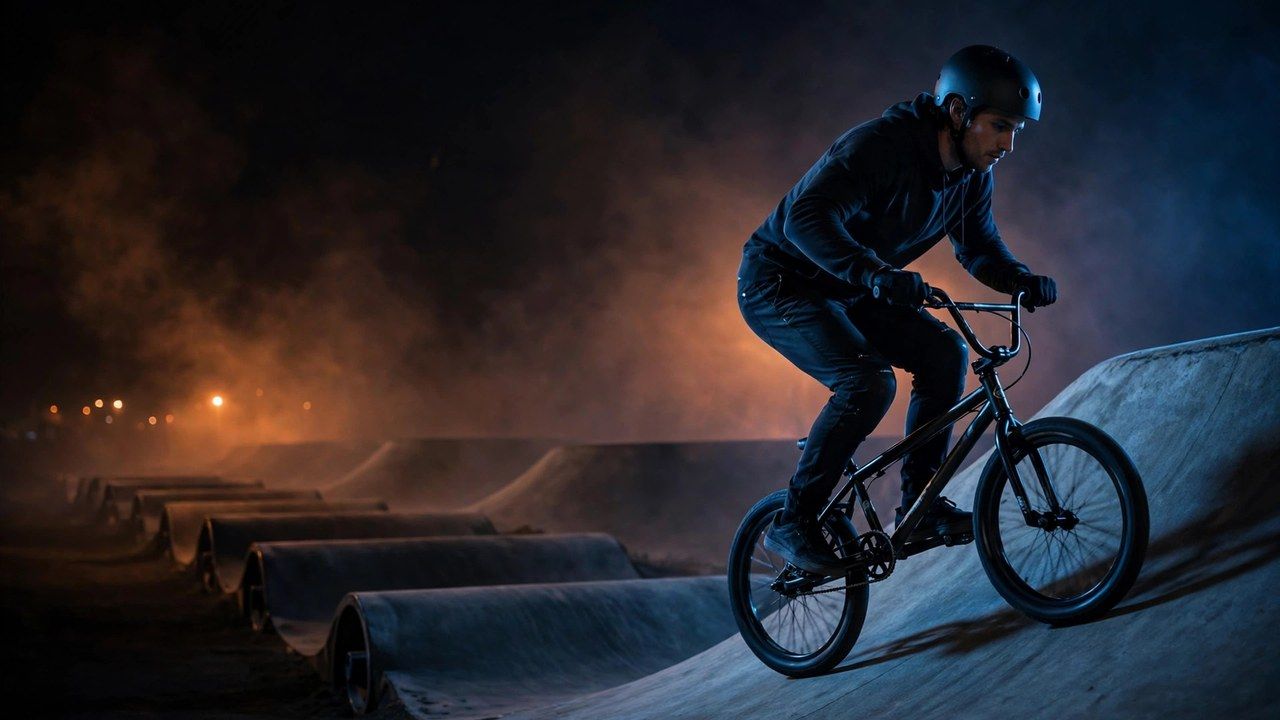
- The up face (unweight): as you reach the face of the roller, flex elbows and knees and let the bike rise "to meet you". Do not pull it up: simply do not weigh on it. The less weight climbs the roller, the less speed you lose.
- The crest (the switch): at the very top your body is tucked and ready. The switch from flexing to extending happens right as you cross the crest, not before or after: that is the "tempo" of pumping.
- The down side (push): as you drop down the back of the roller, extend legs and arms, pushing the wheels into the slope, as if stretching the bike downwards. Your arms push the front wheel; your legs push the rear. That push is the invisible pedal stroke.
Pumping step by step on your first lap
- Roll in with some starting speed (a push with your foot or a preceding drop) and stand on the pedals, cranks level.
- First roller, just unweight: flex on the way up and do nothing else. Feel how the bike "floats" over the crest if you are not weighing on it.
- Second roller, add the push: as you cross the crest, extend and push the bike down the back. Feel the tug of speed as you reach the trough.
- Chain the rhythm: light going up, pushing going down. If a roller throws you off, restart by just unweighting that one and recover the tempo on the next.
- Eyes two rollers ahead: your body prepares each motion in advance; if you watch your wheel, every roller takes you by surprise.
- Complete the lap without pedalling, even if slowly: one clean lap in rhythm is worth more than three fast messy ones.
Progression: from one straight to flying with no pedals
- One roller straight, back and forth: the basic laboratory. Find the tempo until you can chain 4–6 rollers without losing speed.
- The full pump track lap: add the berms: in the turn, pump with your body leaned in too, pushing the bike into the berm.
- Faster and faster, still no pedalling: the proof the motion is right is that speed rises lap after lap. If it falls, your down-side push is missing or there is weight on the up faces.
- Manual between rollers: once pumping is automatic, the trough between two rollers can be crossed in a manual: the next level of control and speed.
- Take it off the pump track: the same technique accelerates the straights of a race track after the gate and builds speed for a bowl line without a single stroke.
Common pumping mistakes
- Pedalling by instinct. At the first roller that slows you, your foot wants a pedal stroke: that lifts the front wheel on the up face and undoes the rhythm. Keep your feet still and level and trust the push.
- Going stiff as a board. With no flex there is no spring: if arms and legs do not bend on the way up or extend on the way down, you are a passenger and the track is in charge.
- Pushing with the arms only. Your legs push the rear wheel, which is where your weight is: an "arms-only" pump dies after two rollers.
- Extending before the crest. Pushing on the up face is rowing against the slope: you spend your strength where it brakes instead of where it drives.
- Rolling into the first roller with no speed. Pumping multiplies the speed you bring, but it does not create it from nothing in the first metre: roll in with a minimum of momentum.
No pump track nearby? Many BMX race tracks in the directory have a roller straight where you can practise the same motion.
What comes next
- Jumping a double by pumping: when the push gives you speed to spare, a roller can be jumped as a double instead of pumped.
- Pumping in a bowl and quarter: the same spring, vertical: extending on the way down the transition is what builds the speed to get high without pedalling.
- The race start and first straight: in competition, whoever pumps the first rollers best reaches the first turn first without spending their legs.
Frequently asked questions
What is pumping on a BMX?
It is generating speed without pedalling, using the ground: you flex and unweight the bike climbing each roller and extend arms and legs pushing the bike into the down side. Repeated roller after roller, that push is the engine of a pump track.
Why do I stall on the first rollers of the pump track?
Because on the up faces all your weight is on the bike and on the down sides you do not push: every roller charges you and none pays you. Unweight going up and push going down, switching right at the crest.
Does pumping work off the pump track?
Yes: it is the technique of BMX racing straights (where you cannot always pedal) and the way to build speed in a bowl or a skatepark line without pedalling.
Do you need to pedal to start pumping?
Only for the first metre of starting speed (a push with your foot works too). From there, pedalling breaks the rhythm: pumping multiplies the speed you bring.
Which matters more, pushing with the arms or the legs?
The legs: they push the rear wheel, which is where your weight is. The arms join in by pushing the front, but an arms-only pump runs out after two rollers.