Learn · 5 min
How to drop in on a BMX: enter the quarter without fear
Entering a quarter or bowl from the deck: position, commitment and progression.
Guide updated
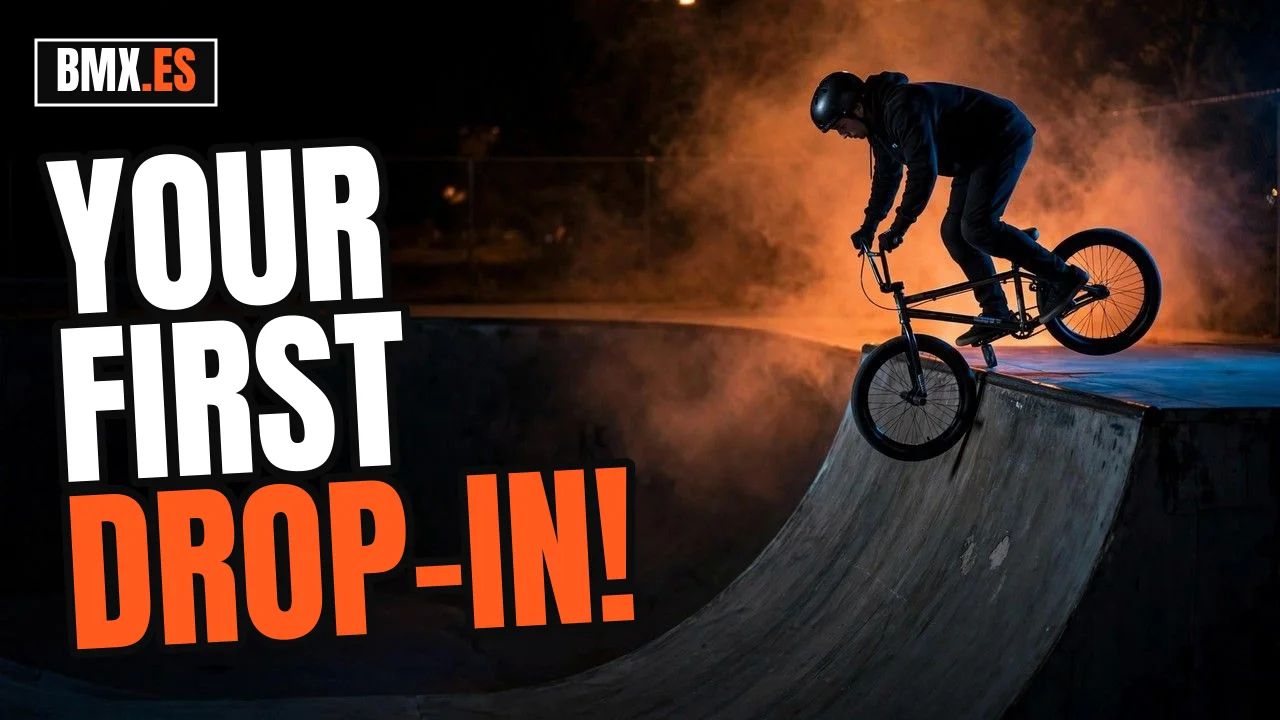
Quick answer: Dropping in is entering a quarter pipe or bowl from the deck above: you place the bike at the edge with the front wheel hanging over the coping, your front foot on the raised pedal and your other foot on the deck; then you lean in with commitment, step onto the back pedal as you fall, and the front wheel tracks down the transition to the flat bottom. It is a move about commitment, not strength: nearly every drop-in crash comes from hesitating halfway, not from a lack of technique.
Dropping in is the gateway to the "real" skatepark: until you can enter a quarter pipe, bowls, ramp lines and half the tricks sit behind glass. And yet the move itself is simple and short: the fall lasts less than a second. What makes it hard is not your body, it is your head: there is an instant, with your front wheel over the void, when you either go or you do not, and going halfway — stabbing a foot down, leaning back — is exactly what must not happen. That is why this article insists on the progression: you reach the edge when the move no longer scares you.
Before you start: what you need
- Comfort rolling low transitions. If you already drop down a bank and ride up and down a roll-in ramp without thinking, you have the base. If transitions still tense you up, pumping and banks are the step before.
- A helmet and, strongly recommended, knee pads. The learning crash of the drop-in is forwards, onto knees or hands: knee pads are the difference between a scare and a week off the bike.
- A low quarter to start (waist height or lower), with coping that does not stick out much and a clear deck. Bowls are started at their shallow end, never at the deep end.
- Turns and space. A drop-in needs the ramp clear and the landing empty: check the skatepark and track etiquette and wait your turn at the edge like everyone else.
The position at the edge
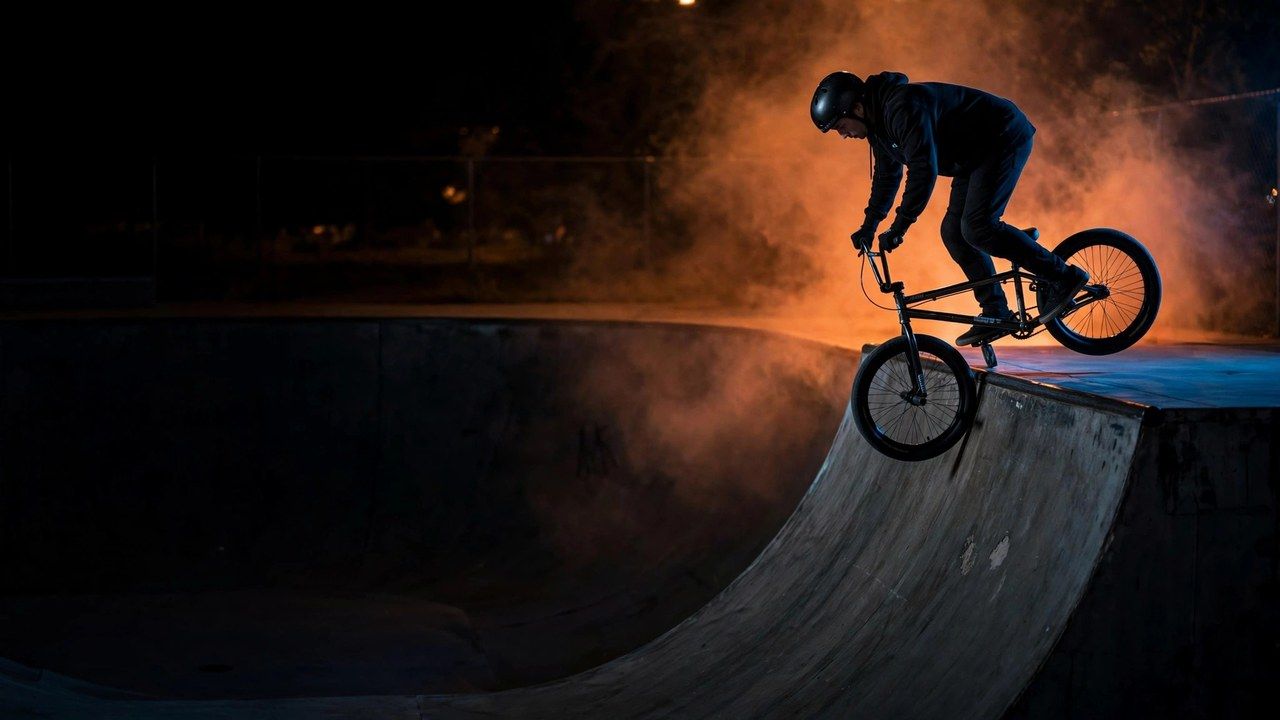
- The bike: rest it at the edge with the rear wheel on the deck and the front wheel hanging over the coping, pointing straight down the transition (not at an angle).
- Your front foot goes on its pedal, with that crank raised (pedal up and forward). That foot does not move again: it is your "in" foot.
- Your other foot stays on the deck, beside the rear wheel. It is the foot that "steps in", and the last one to leave the ground.
- Your hands on the bars, arms relaxed, and your eyes on the bottom of the transition, not the coping: the wheel goes where you look.
Dropping in, step by step
- Set up and breathe. In position at the edge, check the ramp and the flat bottom are clear. If anything distracts you, take the bike down and start again: there is no hurry.
- Lean in with your whole body. The move is born from tipping your shoulders towards the ramp, as if letting yourself fall: the bike follows you. No pushing the wheel down with your arms.
- Step onto the back pedal as you fall. The moment the bike tips in, your deck foot finds the back pedal and lands on it: now you are "on" and falling.
- Let the front wheel follow the transition. Do not pull the bars up: the wheel tracks down on its own if your weight is slightly forward, centred over the bike.
- Flex as you reach the flat bottom. Knees and elbows absorb the arrival like any ramp descent, and you roll away straight, cranks level.
- Repeat on the same quarter until it is boring. The drop-in is learned when there is no longer a "moment of courage": only then is it time to step up a height.
Progression: from roll-in to bowl
- Enter via a roll-in: the sloped ramp with no coping found in many skateparks. The dropping motion already exists there, with no edge involved.
- A very low quarter from the coping: your first real drop-in, with a short fall and the flat bottom close.
- A medium quarter: the one at most skateparks. Same move, a bit more fall and more speed coming out.
- The bowl, at its shallow end: bowls are entered at their least deep part, and over the days you work towards more depth.
- Dropping in at line speed: entering and linking straight into the next ramp or trick, which is what the drop-in exists for.
Common drop-in mistakes
- Hesitating halfway. The king of errors: stabbing a foot at the coping or leaning back once the bike has tipped leaves the front wheel hanging and the rear wheel stuck. If you do not see it clearly, do not start the move; once started, finish it.
- Leaning back. Out of self-protection your body stays on the deck and the front wheel "falls" unguided: you have to lean in, which is exactly the opposite of what fear asks for.
- Watching the coping. Staring at the edge blinds you during the fall: look at the bottom of the transition and then the flat, like on any ramp.
- Pulling the bars up. Lifting the wheel during the fall leaves you with no front support at the flat bottom. The wheel has to stay glued to the wall on the way down.
- Debuting on the big quarter. Height multiplies both the speed and the cost of every mistake. The low quarter teaches the same move with small consequences.
Find a skatepark with low quarters near you in the directory for your first entries.
What comes next
- Dropping in at the deep end of the bowl: more fall and more speed to attack full lines.
- Drop in and pump: linking the drop-in with pumping on the opposite transition to hold speed lap after lap.
- Fakie drop-ins and entry tricks: advanced variants (entering rolling backwards or with a move on the coping) that arrive once the basic one is automatic, as the base of fakie.
Frequently asked questions
What is a drop-in on a BMX?
It is entering a quarter pipe or bowl from the top deck: you place the bike at the edge, front foot on the raised pedal and the other on the deck, lean in with commitment and ride down the transition to the flat bottom.
What height is right for learning to drop in?
A low quarter, waist height or lower, with a short fall. The move is the same at any height: what changes is the speed and the cost of a mistake, which is why height is earned step by step.
Why is hesitating so dangerous on a drop-in?
Because halfway in, the bike is already tipped towards the ramp: stabbing a foot down or leaning back leaves the front wheel in the air and the rear wheel on the coping. The rule is: if you do not see it clearly, do not start; if you start, finish.
Do you need to know how to pump before dropping in?
It is not essential, but it helps a lot: pumping teaches you to flex and extend on transitions, which is exactly what your body does going down and reaching the flat on a drop-in.
How is dropping in different from riding down a roll-in?
A roll-in is a sloped ramp with no edge: you roll and descend, with no moment of decision. The drop-in has the coping and the instant of tipping in from the deck, which is where all the difficulty (and all the learning) lives.