Technique · 6 min read
7 common beginner BMX mistakes (and how to fix them)
Size, pressure, brakes, eyes, protective gear, basics and park etiquette: the seven beginner mistakes, each with its fix in two sentences.
Guide updated
Quick answer: The seven mistakes that hold back every BMX beginner are the wrong size, tyres at the wrong pressure, braking with one brake only, looking at the ground instead of the exit, skipping protective gear, copying tricks with no foundation, and ignoring skatepark etiquette. Every one of them is a quick fix and none of them needs a new purchase: most are sorted in the first session, on the bike you already own.
Starting out in BMX is mostly about learning to fall well and to fix things early. Almost everyone makes these seven mistakes in the first weeks, and none of them is serious on its own: the problem is repeating them for months without knowing they exist. Here is each one with its fix, in two sentences, so your next session already rides better than the last.
1. Picking the wrong size
This is the most expensive mistake on the list, because you pay for it before you ride: a BMX that is too big for you will not turn when you want it to, and one that is too small leaves you no room to stand on it. Size is measured by top tube length for your height, not by age and not by «the one your friend had».
The fix: pick the top tube with the best beginner BMX guide; for kids, the BMX for kids guide has the size chart by wheel. If you already bought the wrong size, swapping it now costs less than fighting it for a whole year.
2. Riding on tyres at the wrong pressure
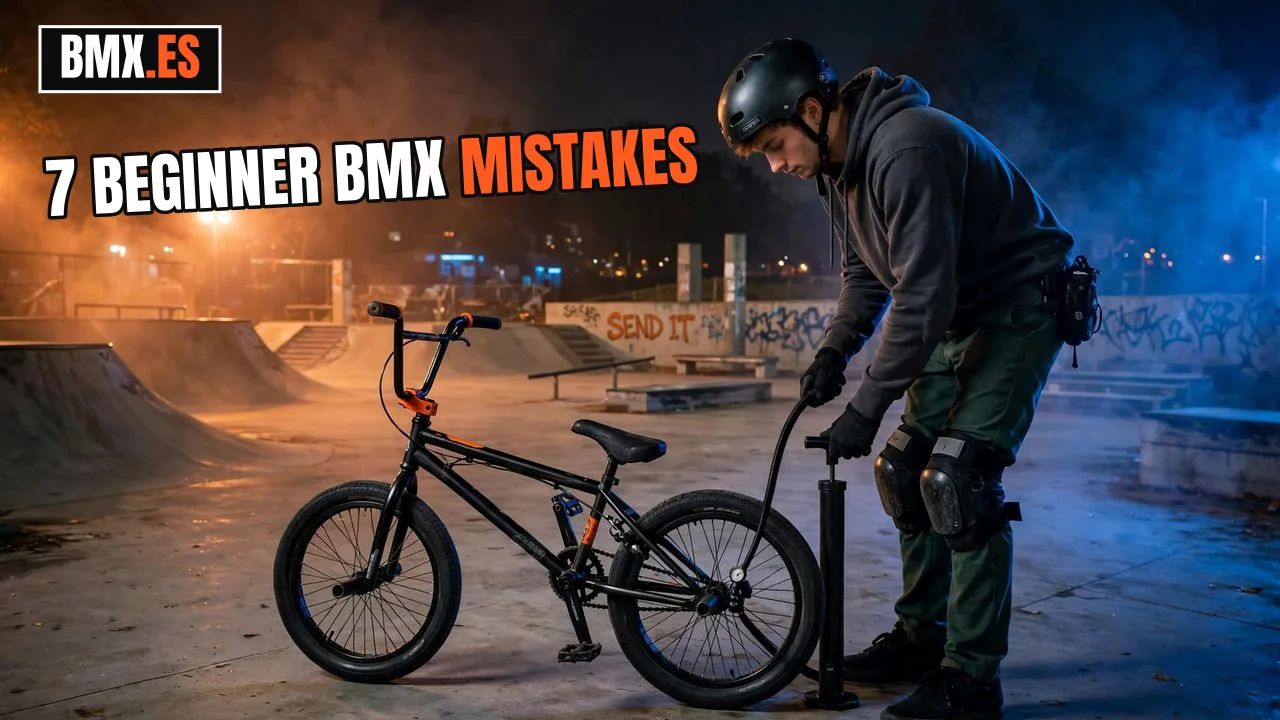
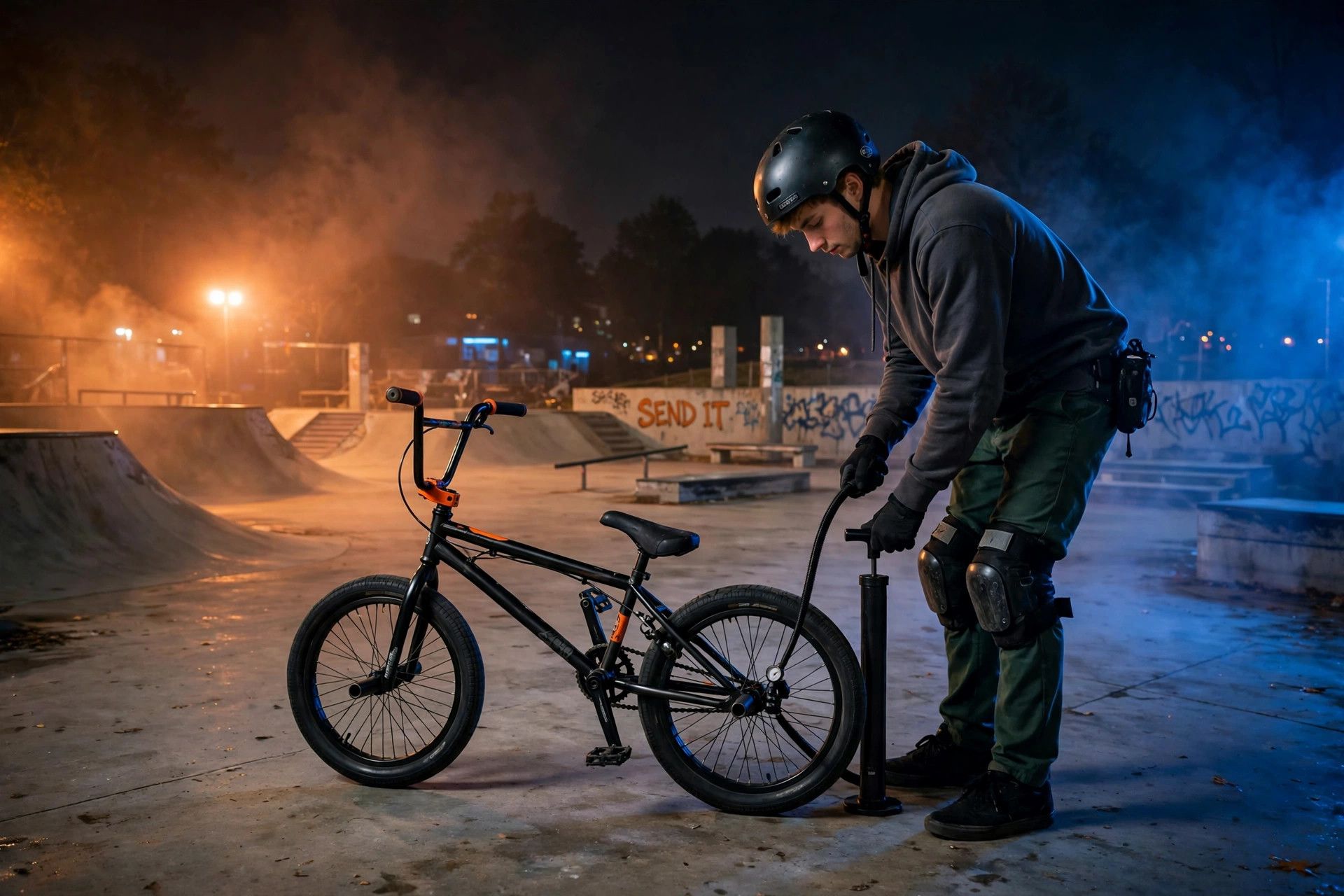
A soft tyre folds in turns, punctures easily and makes the bike feel heavy; a tyre pumped too hard bounces off every bump and loses grip exactly when you need it. And it is the silliest mistake on the list, because it takes a minute to fix.
The fix: pump up to the range printed on the tyre’s sidewall and check the pressure before every session, with a thumb squeeze or a pump with a gauge. The BMX maintenance article puts the one-minute check, tyres included, in its routine.
3. Braking with one brake only
In freestyle almost everyone ends up riding with the rear brake only, which makes the front brake look pointless from day one. It is not: until you fully control the bike, the front brake is what shortens the stop when someone appears in your line or you run out of room.
The fix: learn with both brakes fitted: the rear to control speed and the front for short stops. Once you control the bike, decide whether to keep rear only; the BMX brakes guide explains each system and how to set it up.
4. Looking at the ground instead of the exit
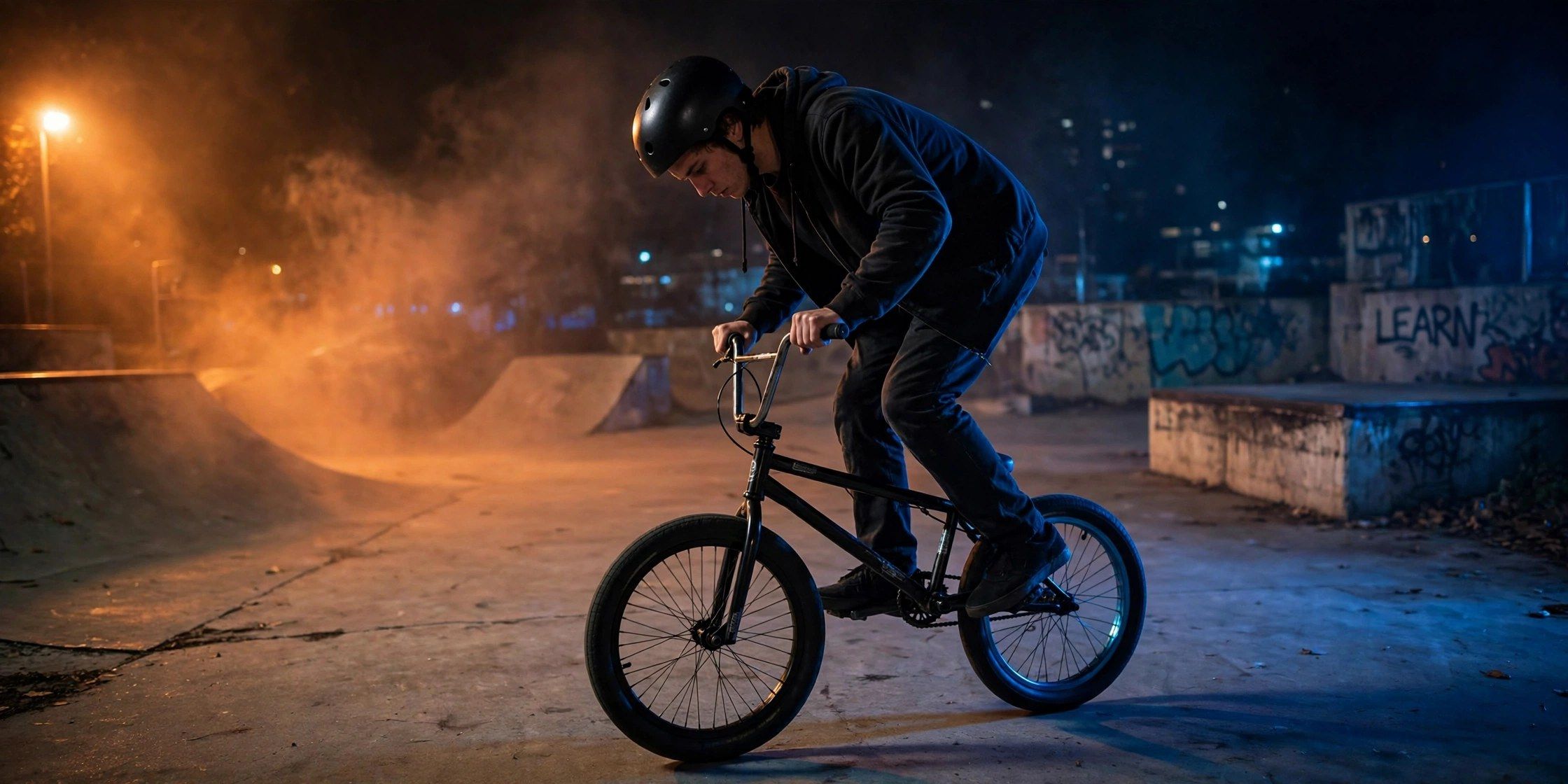
It is the natural reflex — looking where you are about to put the wheel — and it is the mistake that ruins the most tricks: look at the ground and the bike drops with you, the spin closes early and the landing arrives twisted. The bike goes where your eyes go, always.
The fix: look at the exit of the obstacle, not at the front wheel or the ground under your feet. Before you take off, pick a fixed point on the landing and do not let go of it until you touch down: the first steps in BMX guide trains exactly that habit.
5. Skipping protective gear
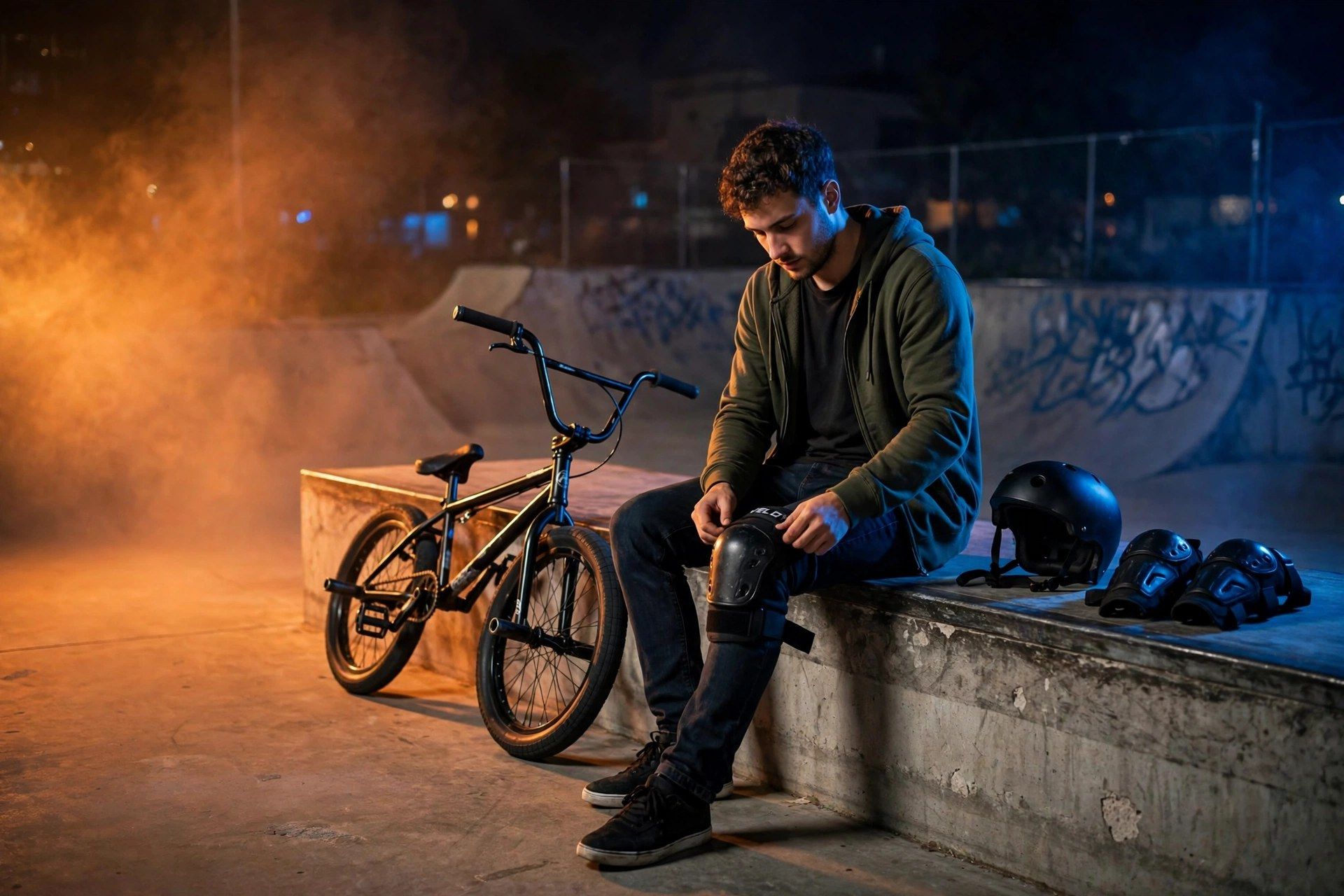
«I’m only going to ride flat ground» lasts until the first silly fall, which usually happens on flat ground, slowly, with the pedals in the way. Beginner falls are slow, but the ground and the pedals do not spare your shins, and a knock on the head gives no warning.
The fix: a helmet always, even for a quiet flat-ground session: the BMX helmets guide explains what to look for. For the first weeks, knee and shin pads too; the BMX protective gear guide orders the rest of the kit.
6. Copying tricks with no foundation
Watching your favourite rider’s barspin and trying it in week one is tempting, and it is the fastest way to learn the move wrong: a trick copied with no foundation lands once in ten tries, and the other nine teach you to do it crooked. The basics are not boring, they are what makes the trick land every time.
The fix: master the bunny hop, the manual and the fakie first: they are the foundation of almost everything else. The first steps in BMX guide sets that order; once the basics are automatic, the trick you copy will arrive in days, not months.
7. Ignoring skatepark etiquette
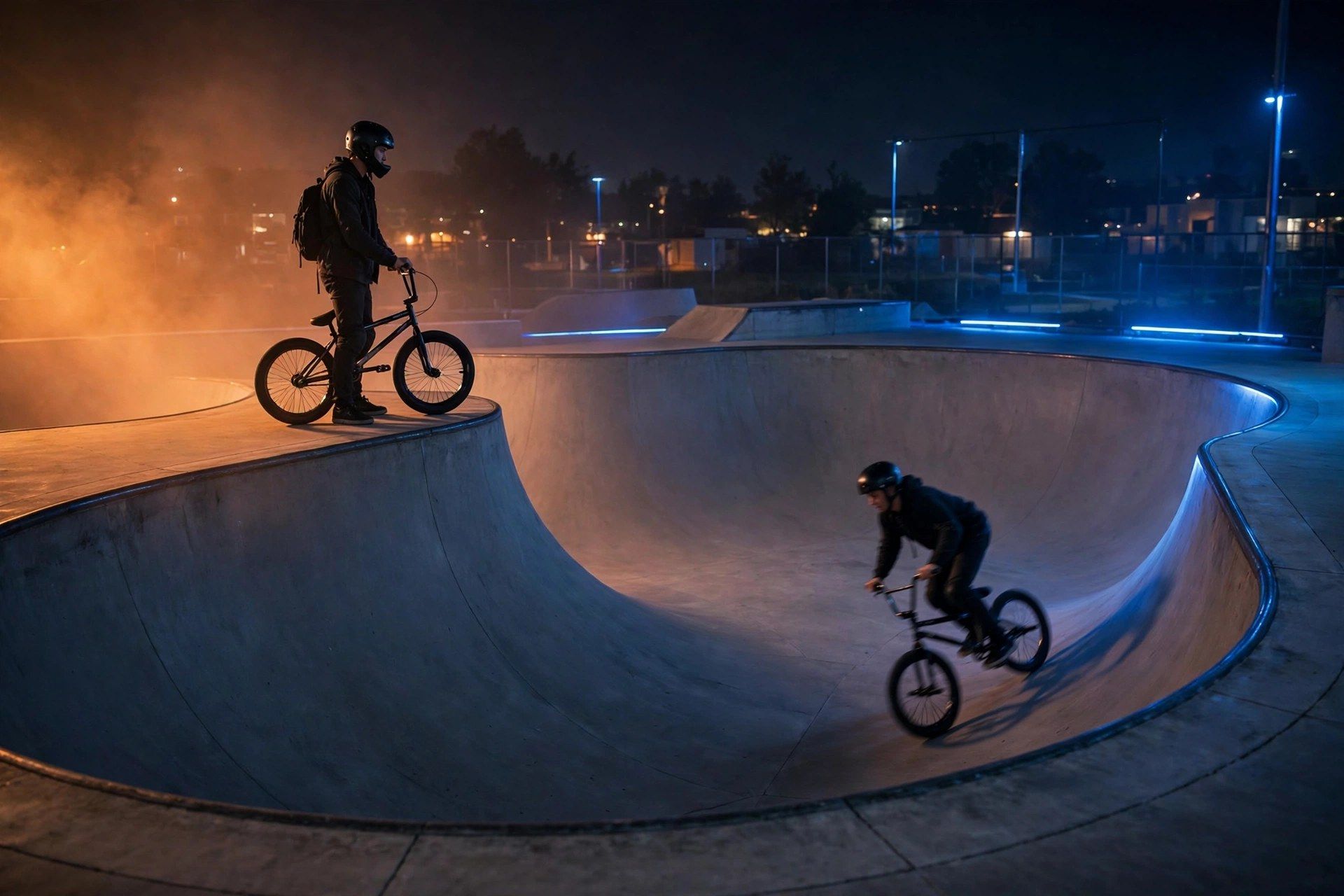
Dropping into a line without looking, cutting across the park or standing still on a landing is not just bad manners: it is how you get a scare or give one to someone else. In a shared park, the rider rolling has priority, and your turn comes in seconds.
The fix: wait your turn at the line entrance, look before you drop in and never cross a line in use. The skatepark and track etiquette guide explains turns, priority and what never to do at a park.
| Mistake | Fix |
|---|---|
| Wrong size | Top tube for your height; swapping now costs less than fighting it for a year |
| Wrong tyre pressure | The range on the tyre sidewall, checked before every session |
| Braking with one brake only | Learn with both: rear for speed, front for short stops |
| Looking at the ground | Eyes fixed on the exit, not on the wheel or the ground |
| Skipping protective gear | Helmet always; knee and shin pads for the first weeks |
| Copying tricks with no foundation | Bunny hop, manual and fakie first; the trick comes after |
| Ignoring park etiquette | Wait at the entrance, look before dropping in, never cross a line in use |
The short version: do and do not
Do
- Measure size by top tube before buying, and change it if you already got it wrong.
- Check tyre pressure before every session.
- Helmet always, pads for the first weeks.
- Look at the exit and master the basics before the trick.
Do not
- Buying by age or «the one your friend had», without checking the size chart.
- Riding on soft tyres «because they still hold up».
- Taking the helmet off «just for this flat session».
- Copying the trick of the moment before your bunny hop is automatic.
Starting right, without overspending
None of these mistakes asks you to buy anything new, but if you are missing the basics, here is what actually gets used: an open-face helmet like the Pro-Tec Classic Certified or the Bell Sanction 2, protective gear like the Pro-Tec Street 3-pack or the Fox Launch D3O knee pads, and, if size was the problem, a beginner complete like the Mongoose Legion L20 or the Wethepeople CRS 2021. The helmets, protective gear, best beginner BMX and BMX for kids guides explain what to check in each case before you pay.
And if you already have the bike and the helmet, the next step is not another trick: it is the first steps in BMX guide, which orders the bunny hop, the manual and the fakie. Fix these seven mistakes first and the rest of BMX follows on its own.
Frequently asked questions
What is the most common mistake when starting BMX?
The wrong size: it gets picked by age or by copying someone else, and a bike that is not your size cannot be made up for with practice. Size is measured by top tube for your height, using the best beginner BMX guide; for kids, the size chart by wheel.
What pressure do BMX tyres run at?
Whatever the tyre sidewall says: every tyre has its range printed on the side. Check it before every session; a soft tyre folds and punctures, and one pumped too hard bounces and loses grip.
Do I need both brakes to learn?
Yes, at first: the rear to control speed and the front for short stops. In freestyle almost everyone ends up on the rear brake only, but that is a decision for once you control the bike.
Do I really need a helmet to practise on flat ground?
Yes: beginner falls usually happen on flat ground, slowly, with the pedals in the way. The helmet is non-negotiable; knee and shin pads, at least for the first weeks.
Why can’t I land the trick I copied from a video?
Because the foundation is missing: without an automatic bunny hop, manual and fakie, the trick lands once in ten tries and the rest teach you the move crooked. With the basics mastered, the same trick arrives in days.
What do I do if I already bought a BMX in the wrong size?
Swap it as soon as you can: it costs less than fighting it for a whole year. If you cannot swap it, check the size chart and, if the difference is one step, a longer or shorter stem can bring it closer — but it works no miracles.