Learn · 5 min
How to tailwhip on a BMX: the frame spin, step by step
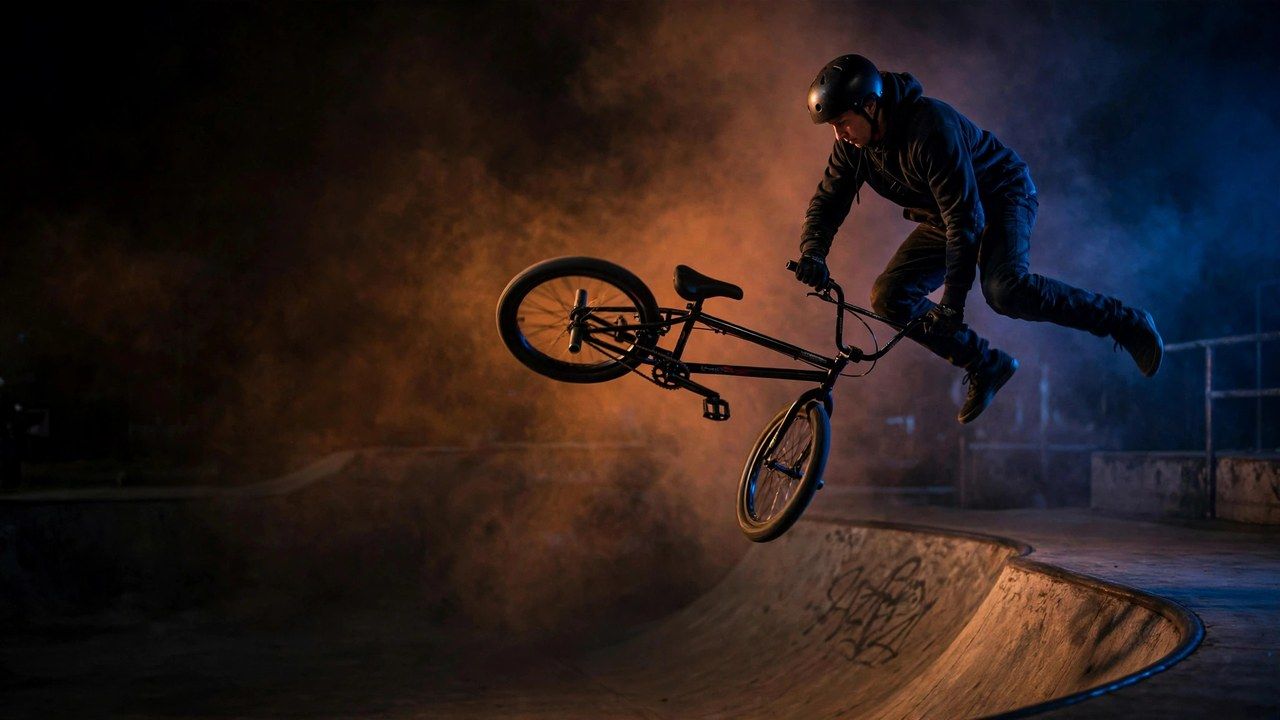
The frame spins a full turn around the bars and you catch it with your feet.
Guide updated
Quick answer: A tailwhip is making the bike frame spin one full turn (360°) around the head tube while you stay in the air above the bars: you take off, kick the frame around with your back foot, your arms draw a small circle with the bars to guide the spin, and when the frame comes back round you catch the pedals with your feet and land. You do not spin: the bike does. Learn it first out of a flyout, where there is air time to spare, and only later on flat ground.
The tailwhip is the first trick where the bike moves "on its own": in the 180 you and the bike spin together, in the barspin only the bars spin, and here the whole frame spins around the head tube while your body stays still in the air. It sounds impossible until you get the idea: you do not "throw" the bike with strength, you flick it with your back foot and let momentum do the turn while your hands, which never leave the bars, guide it round.
Before you start: what you need
- A solid bunny hop and a controlled 180. The tailwhip is built on top of the jump: if your bunny hop is not automatic, you will have no spare attention to watch for the pedals halfway round.
- A helmet and shin guards. The classic learning hit is a pedal or the frame into your shin when the catch comes late. Shin guards turn that hit into a minor scare.
- Platform pedals in good shape. The catch is made "by eye" onto pedals that are spinning with the frame: pedals with worn pins, or ones that spin wildly, make the catch much harder.
- A flyout from a bank or quarter for your first full spins, and flat, empty ground for the early drills. Check the skatepark and track etiquette before hogging a line.
The idea, piece by piece
- The kick: as you take off, your back foot pushes the frame (around the seat stay and pedal) in the direction of the spin. It is not a martial-arts kick: it is a sharp, early flick, right at take-off.
- The arms: with your hands always on the bars, they draw a small circle in the air, like stirring a pot. That circle is what keeps the frame spinning in your plane and "at your height" instead of dropping away.
- The feet: they stay free, slightly apart and waiting. Their job comes at the end: watch the pedals come round and land on them as the frame completes the turn.
- Your eyes: they go to the pedals, not the ground. The landing is prepared with your peripheral vision, just like in the barspin.
The tailwhip step by step (out of a flyout)
- Roll in at medium speed and take off like a normal jump. Cranks level, body centred: the first half of a tailwhip is an ordinary jump.
- The moment you leave the ground, kick with your back foot and start the arm circle. Both motions are born together and early: if you wait until you are "high", the spin stalls halfway.
- Stay over the head tube. Your body stays above the steering axis, leaning neither back nor forward: the frame spins around you, not the other way round.
- Watch the pedals come round. When the frame has done about three quarters of the turn, the pedals come back into your zone: get your feet ready without dropping your eyes to the ground.
- Catch the pedals with your feet and finish the arm circle. Once your feet are on the pedals, the bars come back to place on their own if your hands have completed the circle.
- Land like a normal jump: cranks level, weight centred, eyes ahead, and roll away.
Progression: from the first kick to flat ground
- The kick while rolling slowly, no jump: at low speed on flat ground, flick the frame and let it turn a few degrees while you roll holding the bars. It teaches you not to fear the bike "getting away".
- Half spins out of a flyout: aim for the frame to turn halfway and put your feet back on the ground or pedals however you can. The goal is the full motion (kick + circle), not the landing.
- The full spin out of a flyout: your first real tailwhip, with the flyout's air time on your side.
- Off a box or a jump with a landing: the same motion with a "real" landing and line speed.
- On flat ground, in a bunny hop: the end of the progression. The air is short: kick and circle have to be born at the very instant of take-off.
Common tailwhip mistakes
- Kicking late. If the kick arrives when you are already falling, the frame never completes the turn. Kick and take-off are almost the same instant.
- Pulling the bars into your body. The arm circle is small and round; if you pull inwards, the frame comes closer but stops spinning and tangles with your legs.
- Leaning back. Your place is over the head tube. If you stay back, the frame spins in front of you and the pedals never reach your feet.
- Looking at the ground. Without seeing the pedals come round there is no catch: in this trick your eyes matter more than in almost any other.
- Wanting it on flat ground on day one. A bunny hop gives just enough air for a motion that is already automatic. The flyout progression is not a detour: it is the short way.
Find a skatepark with a good flyout near you in the directory and practise with room.
What comes next
- A consistent flat-ground tailwhip: repeat the flyout version until it also works with no ramp helping, which is when the trick counts as "learned".
- Tailwhip on a big ramp or dirt: more height and more time to catch calmly and with style.
- Out of other tricks: a tailwhip after a manual or out of a 180, once the basic one takes no attention.
- Double tailwhip: two frame spins in one flight. A long-term project: it needs a much stronger kick and a very fast arm circle.
Frequently asked questions
What is a tailwhip on a BMX?
It is making the bike frame spin one full turn (360°) around the head tube while you stay in the air holding the bars, and catching the pedals with your feet before landing. Your body does not spin: the bike does.
What should you be able to do before learning the tailwhip?
A consistent bunny hop and, ideally, a controlled 180. Without an automatic jump there is no air time or spare attention for the kick, the arm circle and the catch.
Which foot kicks in a tailwhip?
Your back foot: at take-off it pushes the frame in the direction of the spin with a sharp flick. Your front foot stays free, waiting to catch the pedals.
Why does my frame stall at half a turn?
Almost always because the kick was late or the arm circle was not completed. The kick has to be born at the very instant of take-off and the bars have to draw the whole circle so the frame keeps its spin.
Is the tailwhip easier on a ramp or on flat ground?
On a ramp (flyout) it is much easier at first because it gives more air time. On flat ground, in a bunny hop, the air is very short and the whole motion has to be instant: that is why flat is the end of the progression, not the start.